 Anacortes Siding
 Building a Deck That Actually Holds Up in Similk Beach
Similk Beach sits close enough to the water that homes here deal with a different set of conditions than decks going in further inland around Skagit County. Marine air off the surrounding bays carries salt that settles on every horizontal surface, driving rain comes in sideways off and on most of the fall and winter, and the shaded, moisture-heavy stretches of the year grow moss on anything that stays damp for more than a day or two. A deck built without those three things in mind will look fine for a season or two and then start showing problems — usually in the fasteners, the substructure, or the board ends before the surface itself ever fails.
Composite decking is a good match for this environment when it's installed correctly, but "composite" isn't a single product with one installation method. The board itself is only part of what determines how a deck performs here. The framing underneath, the way water is allowed to move off and out from under the deck, and the hardware used to hold it all together matter just as much, and in a lot of cases matter more.
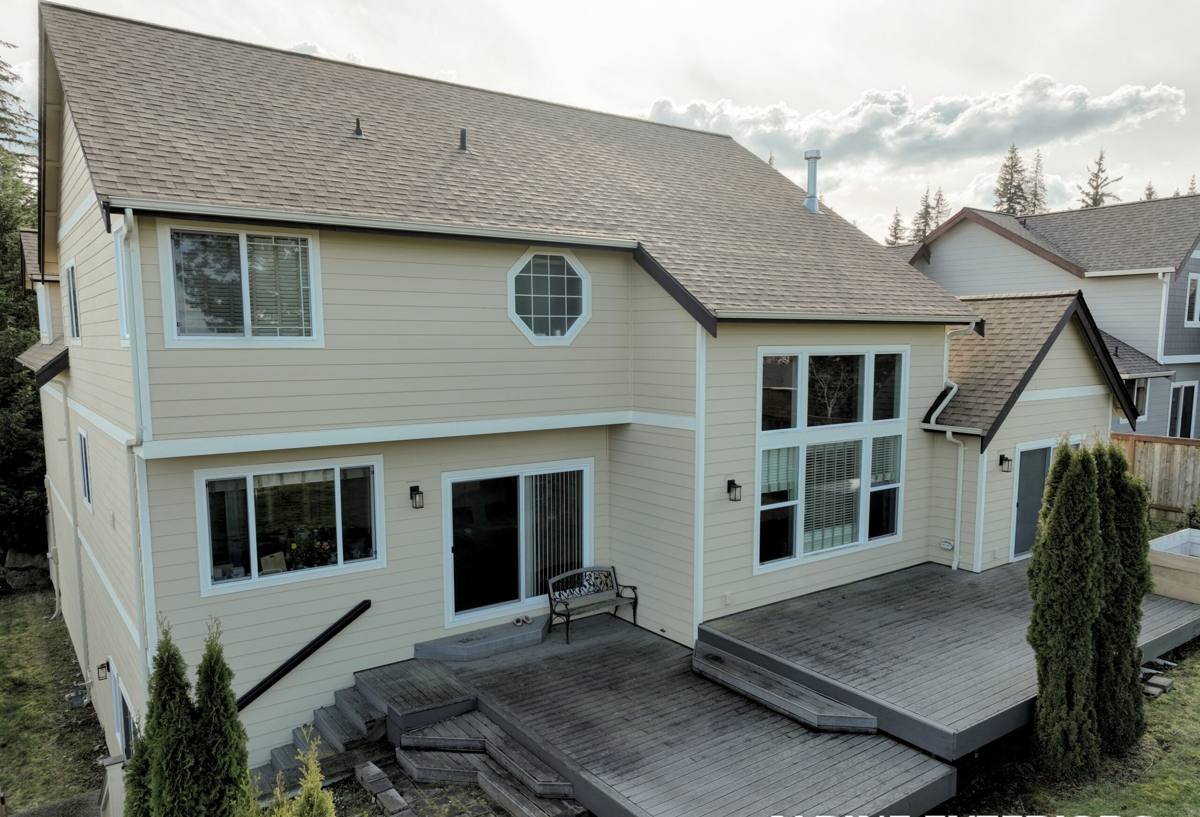
What Similk Beach's Climate Actually Does to a Deck
Salt Air
Airborne salt is corrosive to exposed metal. Fasteners, joist hangers, and any hidden fastening clips that aren't rated for coastal exposure will corrode faster here than the same hardware would in a drier, inland part of the county. Corroded fasteners are one of the most common reasons a deck that "looks fine" is actually loose or unsafe underneath.
Driving Rain
Wind-driven rain doesn't just fall on the deck surface — it gets pushed sideways into board gaps, under railings, and against any wall or ledger connection. Flashing details that would be adequate in a calmer climate can fail here because water is being forced into places it wouldn't normally reach.
Moss and Shade
Wherever a deck sits in shade for a good part of the day, or where airflow underneath is restricted, moss and algae growth is close to guaranteed over time. Moss holds moisture against the board surface and framing far longer than open sun and open air would allow, which accelerates rot in wood components and can shorten the life of lower-grade composite boards too.
None of this means a deck in Similk Beach is doomed — it means the build has to account for all three from the start, not get patched for them later.
Composite, Wood, or PVC: An Honest Comparison
We install composite decking as our standard recommendation for this area, but it's worth being straight about the trade-offs rather than pretending it's the only right answer for every project and budget.
| Factor | Pressure-Treated Wood | Capped Composite | PVC / Vinyl Decking |
|---|---|---|---|
| Upfront cost | Lowest | Mid to upper-mid | Highest |
| Maintenance | Annual sealing/staining, ongoing | Occasional washing, no sealing | Occasional washing, no sealing |
| Moss/algae resistance | Poor without upkeep | Good, better in shaded areas | Good |
| Salt air tolerance (board itself) | Moderate, hardware is the weak point | Good | Good |
| Feel underfoot / heat retention | Natural, cooler | Solid, can warm in direct sun | Can flex more, warms similarly |
| Typical lifespan | 10-15 years with upkeep | 25-30+ years | 25-30+ years |
| Warranty structure | N/A (lumber warranty, if any) | Manufacturer-backed, often prorated | Manufacturer-backed, often prorated |
Wood is a legitimate option for homeowners on a tight budget who are willing to keep up with sealing every year, but in a climate that's wet as much of the year as this one, that upkeep schedule is unforgiving — miss a year or two and rot gets a head start. PVC performs similarly to capped composite in most respects, generally at a higher price point, and some homeowners prefer its lighter weight or brighter color options. For most Similk Beach projects, capped composite is the balance point between upfront cost, low maintenance, and performance in salt air and shade.
What a Correct Composite Deck Build Involves
The Substructure Comes First
The composite boards get the attention, but the framing underneath does most of the work of keeping a deck sound. That means joists protected with a proper flashing tape (not just paint or a coating), joist hangers and structural hardware rated for the exposure the deck will actually see, and framing spaced and sized to the board manufacturer's span requirements rather than whatever was available.
Fastening System
Hidden fastener clip systems give a clean surface with no visible screw heads, but the clips and screws themselves need to be stainless steel or another corrosion-resistant grade in a salt air environment — standard coated deck screws will corrode faster here and can eventually let boards work loose. We match the fastening hardware to the site, not just to whatever ships in the box.
Ventilation and Drainage
Composite boards need airflow underneath just as much as wood does. A deck built low to the ground, over a slope, or against a foundation wall needs enough clearance and, where necessary, a drainage or venting detail so water and moist air aren't trapped under the deck where they'll feed moss and mildew growth.
Board Layout and Cutting
Cut ends of composite boards need to be sealed or capped per the manufacturer's installation instructions — an exposed, uncapped cut edge is one of the more common places moisture gets into a board over time. Expansion gaps also have to be set correctly for temperature swings; too tight and boards can buckle, too loose and they look sloppy and let more debris and water through.
Railings, Stairs, and Ledger Connections
Ledger board attachment to the house is one of the highest-risk points on any deck for water intrusion, and it's also a structural connection that has to be flashed correctly the first time — it's not something you want redone after the deck is finished. Railing posts need solid blocking and correct hardware, especially on a deck exposed to wind coming off open water.
Our Process for a Similk Beach Composite Decking Project
- Site walk and assessment — we look at sun/shade exposure, existing substructure (if replacing an old deck), drainage slope, and how exposed the site is to prevailing wind and rain.
- Board and hardware selection — we walk through composite options and fastening hardware suited to the site's exposure, with honest cost and maintenance trade-offs, not just a single default recommendation.
- Substructure build or repair — framing is built or reinforced to current span and hardware standards before a single composite board goes down.
- Flashing and drainage detailing — ledger connections, post bases, and any low-clearance areas get proper flashing and airflow considered before decking starts.
- Decking installation — boards installed per manufacturer spec for fastening, gapping, and cut-end sealing.
- Railings, stairs, and finish details — completed and checked for solid attachment before final walkthrough.
- Final walkthrough — we go over basic care so the deck's finish and warranty stay intact.
Maintenance Reality for This Area
Composite decking is marketed as low-maintenance, and compared to wood it is, but "low" isn't "none" — especially with a moss season as long as this region has. A homeowner in Similk Beach should expect to:
- Sweep or blow off debris regularly, especially under trees or in shaded corners where moss gets a foothold fastest
- Wash the deck surface once or twice a year with a mild cleaner and soft-bristle brush (avoid pressure washing directly into board grooves, which can force water and debris in rather than out)
- Check railing and stair connections periodically for looseness, particularly after the first winter
- Keep gutters and downspouts near the deck clear so runoff isn't being dumped directly onto or under the deck
- Trim back vegetation that's shading the deck surface and keeping it damp longer than it needs to be
Mistakes We See on Deck Replacements in This Area
A good share of our composite decking work in and around Anacortes is replacing a deck that failed early — and it's rarely the composite board itself that's at fault. The more common culprits are standard-grade fasteners that corroded in the salt air, ledger connections that were never properly flashed, framing that wasn't protected before the decking went down, and low-clearance areas with no airflow that turned into a moss and rot problem underneath boards that still looked fine on top. Fixing these means rebuilding the substructure correctly, not just laying new boards over the same problems.
Questions Worth Asking Before You Sign a Contract
- What fastening hardware will be used, and is it rated for coastal/salt air exposure?
- How will the ledger board be flashed where the deck meets the house?
- What's the plan for airflow and drainage under low-clearance sections of the deck?
- Are cut board ends sealed or capped per the manufacturer's requirements?
- Is the manufacturer's warranty on the boards contingent on a certified installer, and does that apply here?
- What does routine maintenance look like for the specific product being installed?
Why Local Experience in Similk Beach Matters
A deck built to a generic set of instructions without accounting for Skagit County's coastal exposure is a deck that's more likely to need early repairs. Knowing how far wind-driven rain travels into a ledger connection on an exposed lot, which fastening hardware actually holds up to salt air over years rather than months, and how much airflow a low deck needs to keep moss from taking over underneath — that comes from having built and repaired decks in this specific area, not just decks in general. It's the difference between a deck that needs attention again in five years and one that's still solid at twenty-five.
If you're planning a new composite deck or replacing one that didn't hold up, we're happy to walk the site, look at what's there now, and give you a straightforward estimate — no pressure, no upsell, just what the job actually needs.