 Anacortes Siding
 Why Decks Near Similk Beach Wear Out Faster Than Most
Similk Beach sits close enough to the water that homes here take a different kind of weather beating than decks built further inland in Skagit County. Salt-laden air corrodes fasteners and hardware years before they'd normally fail. Driving rain off the water gets pushed sideways under railings and against ledger boards instead of just falling straight down. And the long, damp Pacific Northwest moss season means any deck surface that doesn't shed water fast turns green, then slick, then soft.
None of that means a deck can't last decades in this location. It means the replacement has to account for those three things specifically, not just swap old boards for new ones on the same frame and call it done. A deck that's rated fine for a dry inland yard in Anacortes can still fail early a few blocks from Similk Bay if it wasn't built with this exposure in mind.
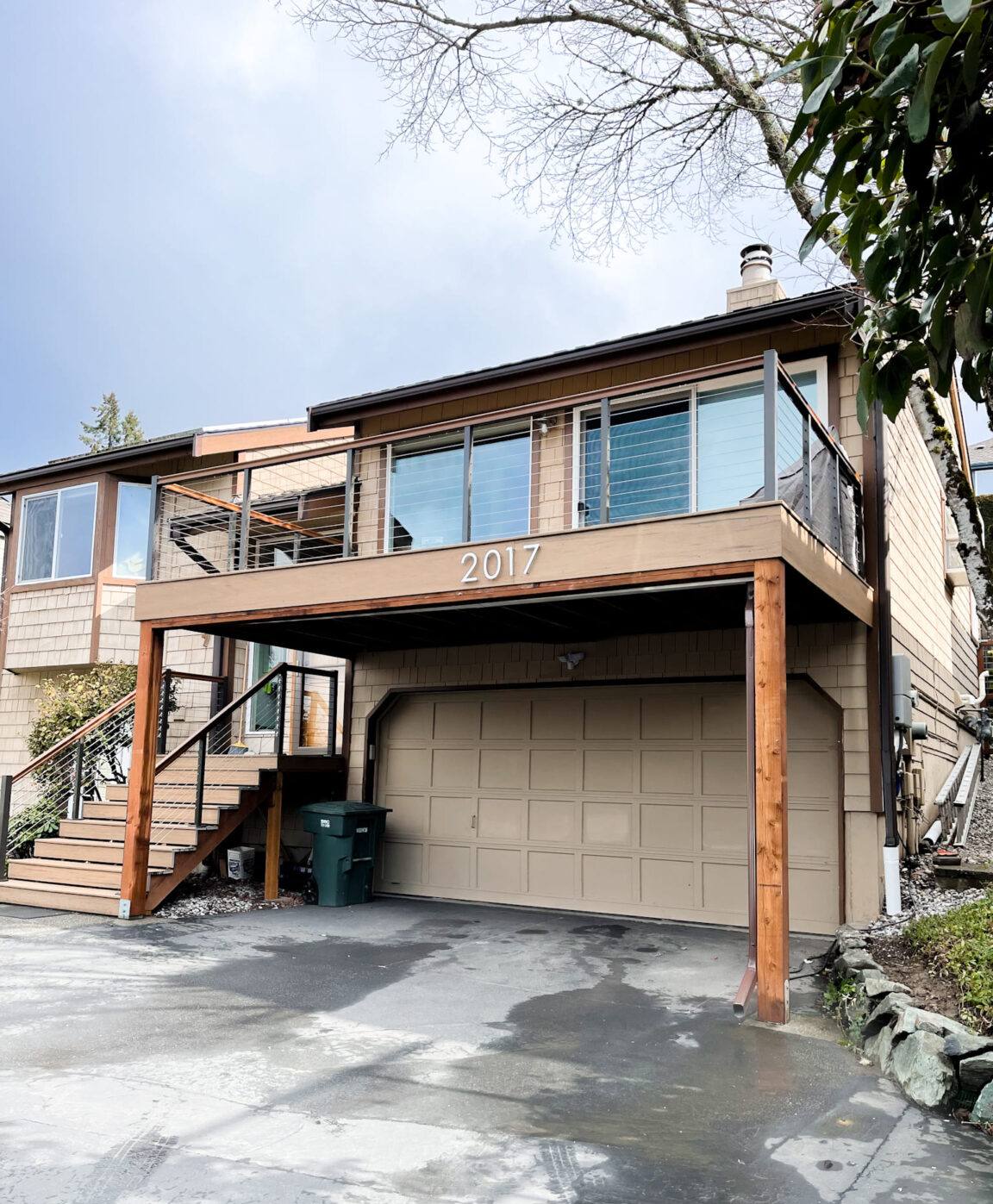
What a Correct Deck Replacement Actually Involves
A real deck replacement is a structural project, not a cosmetic one. Anyone can screw new boards to an old frame. The work that actually matters happens underneath, where nobody looks until something gives out.
The parts that determine whether it lasts
- Ledger board and flashing — where the deck attaches to the house is the single most common failure point we find, especially where wind-driven rain has been forcing moisture behind old or missing flashing for years.
- Joists and framing — pressure-treated lumber is standard, but joist tape or a comparable barrier over the top edge of each joist keeps standing water from soaking into end grain, which is where rot starts fastest.
- Footings and posts — in wet, low-lying yards near the water, footing depth and post-base hardware that keeps wood off the concrete matter more than they would on a drier inland lot.
- Fastener and hardware grade — salt air is hard on standard galvanized hardware. Stainless or heavy hot-dip galvanized fasteners cost more up front and save you a hardware failure a few years in.
Get those four right and the decking material on top becomes mostly a matter of look, feel, and maintenance preference. Get any of them wrong and it doesn't matter what decking you chose — the frame underneath will fail first.
Materials That Hold Up in This Climate
There's no single "best" decking material for every home. There is a best material for a given budget, maintenance appetite, and exposure. For a property this close to Similk Bay, moisture behavior and moss resistance carry more weight than they would on a dry, sheltered lot.
| Material | Salt air / moisture behavior | Moss and algae resistance | Ongoing maintenance | Realistic lifespan here |
|---|---|---|---|---|
| Pressure-treated wood | Handles moisture well if sealed and re-sealed on schedule; end grain is the weak point | Needs regular cleaning and a moss-inhibiting treatment or it will green up | Annual cleaning, re-staining every 2-3 years | 15-20 years with upkeep |
| Cedar | Naturally rot-resistant but softer and more vulnerable to gouging and moisture cupping | Better than PT wood untreated, but still needs cleaning in a damp climate | Regular cleaning and sealing to hold color and resist moss | 15-20 years with upkeep |
| Capped composite | Doesn't absorb water or rot; performs well in salt air with no sealing needed | Much harder for moss/algae to take hold on the capped surface; still needs washing | Occasional washing, no staining or sealing | 25-30 years, manufacturer-warrantied |
| PVC decking | Fully moisture-proof, unaffected by salt air or standing water | Very low moss/algae adhesion, easiest surface to keep clean | Lowest maintenance of the group | 25-30+ years, manufacturer-warrantied |
We'll walk you through this trade-off honestly rather than push one product. A lot of Similk Beach homeowners land on capped composite or PVC specifically because they're tired of re-staining a deck every couple of years while the moss creeps back in during the wet months — but a well-built and properly maintained wood deck is still a legitimate, lower-cost option if you're willing to keep up with it.
Our Deck Replacement Process
- On-site assessment — we look at the existing frame, ledger connection, footings, and drainage before quoting anything, since a lot of the real cost driver is what's hidden under the current decking.
- Full tear-off — old decking, and any framing that doesn't pass inspection, comes out completely. We don't deck over questionable framing.
- Structural correction — ledger flashing, joist protection, footing or post repairs, and hardware upgrades happen here, before a single new board goes down.
- Decking and railing installation — installed to the manufacturer's fastening and spacing specs, which matters for both appearance and warranty coverage.
- Final walk-through — we go over the deck with you, point out anything you should know for upkeep, and answer questions before we consider the job finished.
Common Problems We Find When We Tear Off Decks in This Area
Every neighborhood has patterns. Near Similk Beach and the surrounding waterfront-adjacent parts of Skagit County, the issues we see most often on tear-off are consistent enough to plan around:
- Ledger flashing that was missing, undersized, or installed backward, letting water track into the house rim joist for years unnoticed.
- Joist tops with no protective tape or membrane, so the first few inches of decking near the house show the earliest rot even when the rest of the deck looks fine.
- Standard galvanized screws and joist hangers showing more corrosion than their age would suggest, a direct result of salt air exposure.
- Moss and algae buildup on the north- or water-facing side of the deck that's been treated as a cleaning problem for years when it's really a drainage and airflow problem.
- Railing posts that were only surface-fastened rather than properly through-bolted or blocked, which becomes a safety issue well before it becomes a visible one.
Railings and Hardware Built for Salt Air
Railings take a different kind of abuse than the deck surface — they're handled constantly, they're the first thing hit by wind-driven rain coming off the water, and they're the part of the deck where a hardware failure is an actual safety concern, not just a cosmetic one. We spec stainless or heavy-duty coated fasteners and hardware for railing posts and connections specifically because standard hardware corrodes faster this close to the water. It costs a bit more up front. It's not the place to cut corners.
Signs your current deck is due for replacement, not another repair
- Soft or spongy spots anywhere in the decking surface, especially near the house.
- Visible gaps, cracking, or staining at the ledger board where it meets the house.
- Railing posts that flex or feel loose when you lean on them.
- Persistent moss or dark staining that comes right back within weeks of cleaning.
- Fasteners showing rust streaks or corrosion around the screw heads.
- A deck more than 15-20 years old that's never had the frame inspected, only the surface refinished.
Maintaining Your New Deck Through Moss Season
Whatever material you choose, a little seasonal attention goes a long way in this climate:
- Clean the surface and clear debris from between boards at least twice a year, more often under trees or in shaded, damp corners.
- Keep gutters and downspouts near the deck clear so runoff isn't dumping extra water onto or under it.
- If you chose wood, stay on a re-sealing schedule rather than waiting until it visibly needs it.
- Check railing connections and fastener heads once a year for early corrosion signs, especially on the side facing the water.
- Keep vegetation trimmed back from the deck edges so sun and air can reach damp spots instead of letting them stay shaded and wet all winter.
Why It Matters That We Already Work in Similk Beach
A contractor who mostly works drier, inland jobs will often spec a deck the same way regardless of where it sits. A crew that already works homes around Similk Beach and the rest of Anacortes knows which ledger details fail first in this exposure, which hardware actually holds up, and which "standard" building approach needs an upgrade this close to the water. That's not a marketing point — it's the difference between a deck that needs attention again in five years and one that doesn't.
If your deck is showing its age, or you just want an honest opinion on repair versus full replacement, we're happy to take a look and give you a straightforward assessment — no pressure, no upsell, just a free estimate and a clear explanation of what your deck actually needs.