 Anacortes Siding
 Similk Beach sits along the shoreline of Similk Bay on Fidalgo Island, just outside Anacortes, and homes there face a version of Skagit County's marine climate that's more constant than what you'd find a few miles inland. Salt-tinged air moves off the bay year-round, driving rain comes in sideways more often than it falls straight down, and the tree cover and dampness that define this stretch of shoreline keep moss active for most of the year. If you own a home in Similk Beach, your siding is doing more work than siding on a sheltered inland lot, and it needs to be chosen and installed with that in mind. This page is specifically about fiber cement siding for Similk Beach properties — what the climate actually demands, what a correct installation looks like, and how our process works when we take on a project in this neighborhood.
What Similk Beach's Climate Actually Does to Siding
Every siding material eventually shows the effects of weather, but the timeline and the failure pattern change a lot depending on how close a home sits to open water. Similk Beach properties get a heavier, more concentrated dose of the same conditions that affect the broader Anacortes area.
Salt Air and Corrosion
Air moving across Similk Bay carries salt, and that salt accelerates corrosion on exposed fasteners, flashing, and hardware faster than it would on a home set back from the water. It also degrades lower-grade paints and coatings more quickly, which is why siding finishes that hold up fine in a drier inland climate can start chalking, fading, or peeling years ahead of schedule on a Similk Beach exterior.
Driving Rain, Not Just Rainfall
Open water exposure means less windbreak, and wind is what turns rain into a horizontal problem instead of a vertical one. Driving rain gets pushed into lap joints, trim seams, and any gap in flashing that isn't detailed correctly. A siding system that would perform adequately somewhere calmer can still let water in here, because the water isn't just falling on the wall — it's being driven into it.
A Long Moss Season
Shaded, north-facing walls and anything under mature tree cover near the shoreline stay damp for extended stretches, and that's exactly what moss and mildew need to take hold. On wood-based or wood-look siding, sustained organic growth isn't just a cosmetic problem — it holds moisture against the wall assembly, which over time is a direct path to rot behind the siding if it isn't addressed.
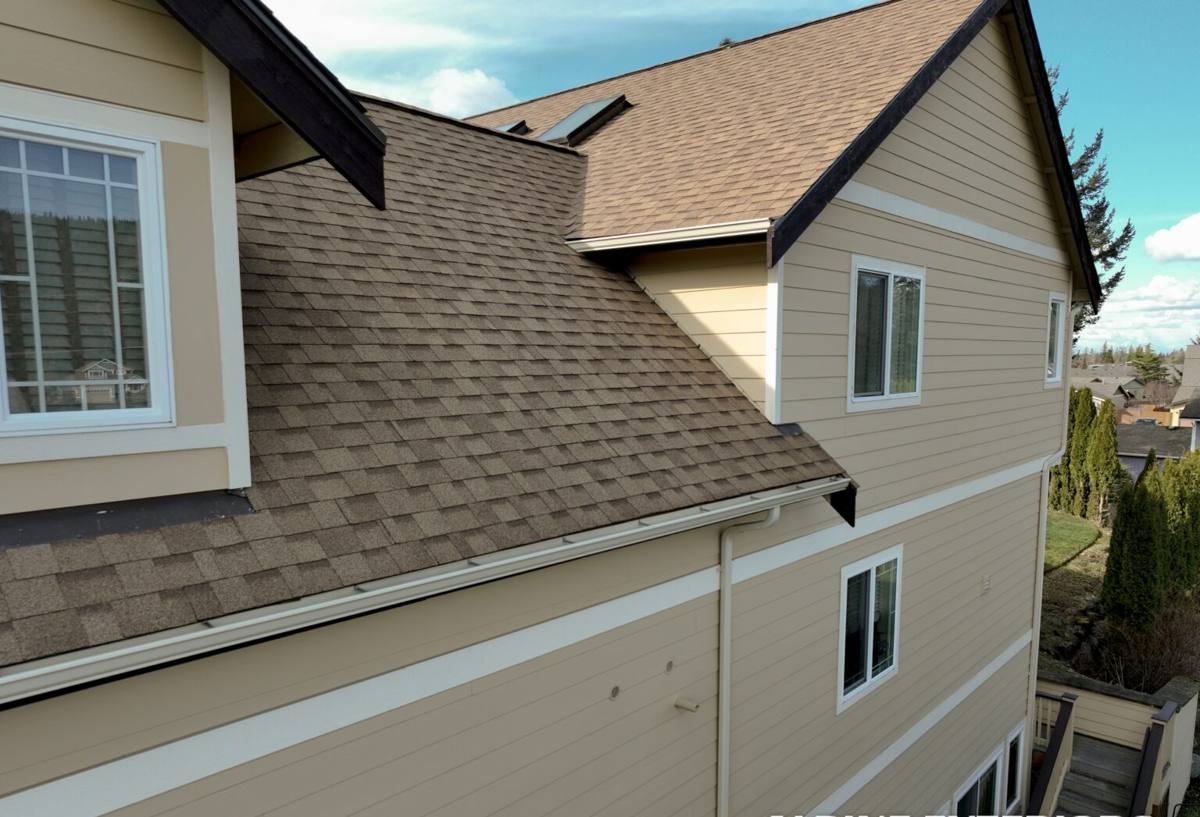
Why Fiber Cement Is the Right Call for This Location
Given what Similk Beach's exposure does to a home over time, fiber cement is the material we recommend most strongly for this specific stretch of shoreline. We install James Hardie fiber cement exclusively — we don't install vinyl, LP SmartSide, Cemplank, Allura, primed spruce, or cedar. That's a professional standard we've built around what actually holds up in this climate, not a limitation on what we're capable of installing.
Fiber cement's core doesn't absorb moisture and swell the way engineered wood products can after repeated wet-season cycling, and it doesn't warp or become brittle under UV and salt exposure the way vinyl can over a long enough timeline near open water. James Hardie's ColorPlus finish is baked on at the factory under controlled conditions rather than brushed on in the field, so it resists the fading and chalking that salt air and constant moisture cause in lower-grade finishes. Hardie also builds region-specific HZ product lines engineered for climates like ours, and for the Pacific Northwest that means the HZ5 formulation, built to handle sustained moisture exposure and freeze-thaw cycling rather than the drier conditions some other Hardie lines are designed around. Backed by a strong transferable warranty and installed to spec, it's the system we trust to perform through a full Similk Beach winter, not just look good the day it goes up.
None of this is a knock on every other product on the market — vinyl, engineered wood, and other fiber cement brands all have a place, and plenty of homeowners elsewhere are satisfied with them. But for a shoreline property on Similk Bay, we've made the call that one material we trust completely is worth more than a cheaper option that quietly shifts maintenance risk back onto the homeowner a few years down the line.
What a Correct Fiber Cement Installation Involves Here
Buying the right material only gets a Similk Beach home partway there. The rest comes down to installation detail, and on a property that takes more wind and more direct rain than a sheltered inland lot, shortcuts in the installation show up faster.
Clearance and Drainage
Fiber cement siding needs proper clearance from grade, roofing, decks, and hardscaping so water has somewhere to go instead of wicking up into the bottom edge of the board. On shoreline lots where the ground can stay wet longer through the fall and winter, that clearance matters even more than the manufacturer's minimum spec suggests.
Fastening and Joint Treatment
Fasteners need to be corrosion-resistant and set to the correct depth — overdriven or underdriven nails are one of the more common causes of early siding failure we see on inspections. Joints should be lapped and flashed correctly rather than simply butted together and caulked, since caulk is a maintenance item, not a substitute for proper flashing.
House Wrap and Flashing Integration
The siding is only one layer of a wall assembly that's supposed to manage water as a system. House wrap, window and door flashing, and the siding itself all need to work together so that any water that does get past the surface has a way to drain back out rather than getting trapped against the sheathing. This is where a lot of the real long-term performance difference between a correctly installed job and a rushed one actually lives, and it's not something a homeowner can easily judge just by looking at the finished wall.
Tear-Off vs. Overlay
On some Similk Beach homes, a full tear-off is the right call because it lets us see and address any hidden moisture damage to the sheathing before new siding goes on. On others, if the substrate is sound, a more targeted approach may make sense. We'll tell you which situation you're actually in after a real inspection, not before.
Repair or Full Replacement?
Not every siding problem on a Similk Beach home means a full re-side. Isolated impact damage, a section that's failed around a single window, or storm-related trim damage can often be repaired and matched into existing Hardie siding without touching the rest of the wall. But when water has clearly been tracking behind the siding for a while, or the home still has an aging, non-Hardie product nearing the end of its service life, patching it usually just delays a bigger job while hidden rot keeps spreading underneath. An honest inspection is what tells the difference, and that's the starting point for every estimate we give.
Cost Factors for a Similk Beach Siding Project
| Factor | What It Affects | Why It Matters at Similk Beach |
|---|---|---|
| Proximity to the shoreline | Salt and wind exposure level | Homes closest to Similk Bay see faster material and finish degradation than homes set back from the water |
| Tear-off vs. overlay | Labor scope and substrate access | Tear-off reveals hidden moisture damage that's common under older siding on shoreline lots |
| Substrate condition | Repair costs before new siding goes on | Trapped moisture over time can rot sheathing and framing that isn't visible until the old siding comes off |
| Wall orientation and shade | Fastening and flashing detail, moss exposure | North-facing and tree-shaded walls near the water stay damp longer and need extra attention at joints and seams |
| Site access | Labor time and staging | Shoreline lots can have tighter access, slopes, or limited staging space compared to inland properties |
Exact numbers depend on the specific home and its exposure, which is why we walk the property in person before giving a real figure instead of quoting off a generic price sheet.
Signs Your Similk Beach Home's Siding Needs Attention
- Moss or dark staining that returns quickly after cleaning, especially on shaded or north-facing walls
- Soft or spongy siding near the base of the wall or around window and door trim
- Rusting fasteners, corroding flashing, or a chalky, faded finish
- Cracked, warped, or missing siding sections, especially after a winter storm
- Visible gaps or open seams at corners, joints, or window trim
- Peeling or bubbling paint on wood trim adjacent to the siding
- A noticeable rise in heating costs that may point to a wall assembly no longer sealing properly
Our Process for a Similk Beach Siding Project
- An in-person inspection of the current siding, trim, and any visible moisture damage, with an honest read on whether you're looking at repair or full replacement
- A written estimate that lays out material, labor, and any substrate repair we expect to find once the old siding comes off
- Correct removal and disposal of the old siding, with sheathing repair addressed before anything new goes up if damage turns up
- Installation of James Hardie fiber cement to manufacturer spec, with fastening, flashing, and clearance details set for this shoreline's exposure
- A final walkthrough so you can see the finished work and ask questions before we consider the job done
Why a Crew That Already Works Similk Beach Matters
A lot of what separates siding that lasts from siding that needs attention again in a few years comes down to details a homeowner rarely sees: how much rain exposure a given wall orientation actually gets this close to the water, where moss is likely to establish itself first, and how much clearance siding needs above grade given how long the ground stays wet on a shoreline lot. Crews who work this part of Skagit County regularly see these patterns repeat from house to house along Similk Bay, and that familiarity shows up in the small, on-site decisions — fastener spacing, flashing sequence, where extra attention actually pays off — that make the real difference in how a home's exterior performs over the following decade, not just how it looks on installation day.
If your Similk Beach home needs new siding, a repair, or just an honest second opinion on what's happening behind an aging wall, we're glad to take a look. Reach out using the form below for a free, no-pressure estimate.