 Anacortes Siding
 Roof Repair Built for Similk Beach's Exposure
Similk Beach sits close enough to the water that the air itself works against a roof. Salt-laden moisture off the Salish Sea, driving rain that comes in sideways during winter storms, and a moss season that can stretch from fall through spring all add up to conditions that inland Skagit County roofs simply don't face in the same combination. A roof repair here has to account for all three, not just patch whatever is leaking today.
We've repaired enough roofs in this stretch of Fidalgo Island to know that a fix that ignores the local climate usually comes back as a second service call within a year or two. Our approach is to diagnose the actual cause before we touch a single shingle.
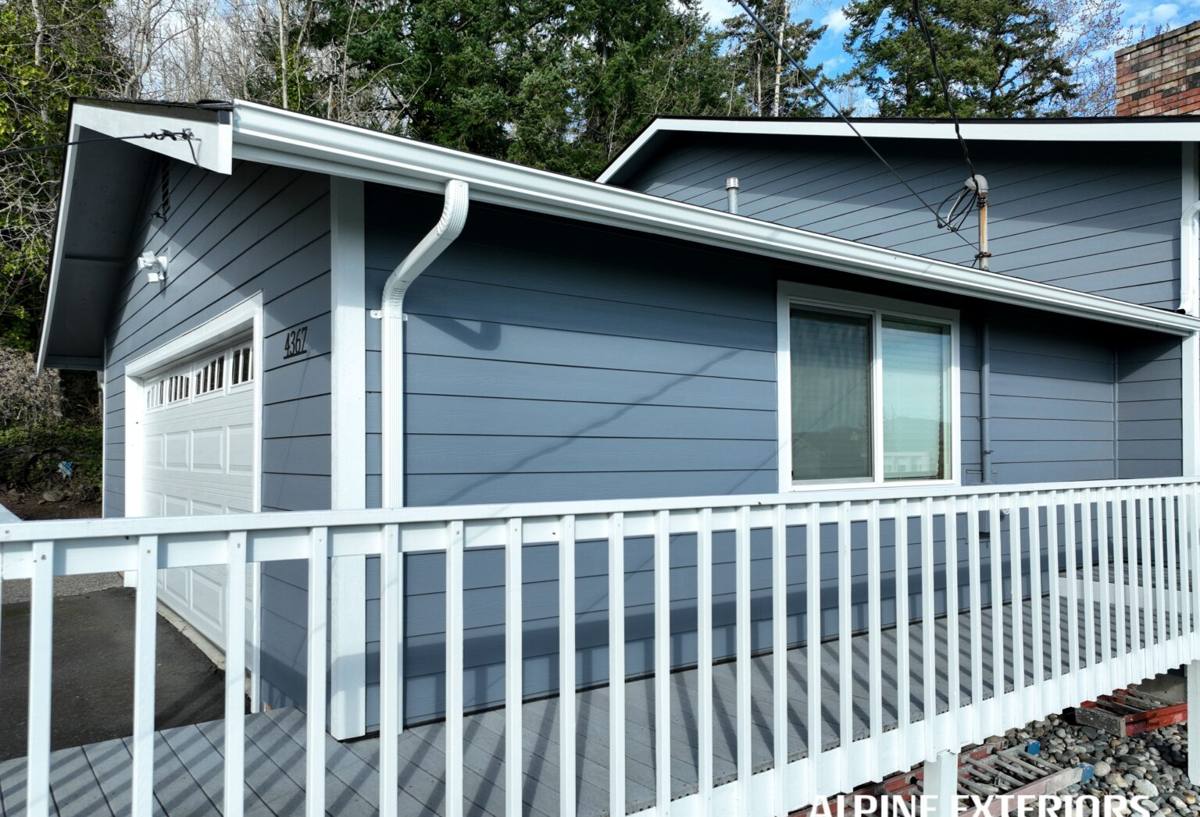
What Salt Air, Rain, and Moss Actually Do to a Roof
Salt air and metal components
Flashing, fasteners, gutters, and vent caps are usually the first parts of a roof to show wear near the water. Salt-laden air accelerates corrosion on exposed metal, and once a fastener or flashing seam starts to corrode, it stops sealing the way it should. A roof can look fine from the ground while its flashing is already failing underneath.
Driving rain and wind-driven water
Storms off the water tend to push rain sideways rather than straight down. That matters because most roofing materials are built to shed water moving downhill, not water forced sideways or up under a shingle edge. Repairs in this area need extra attention at laps, valleys, and any horizontal seam where wind-driven rain can find a way in.
Moss, algae, and shingle lift
A long wet season with limited summer drying time gives moss and algae plenty of time to establish. Moss doesn't just look bad — its root structure works into shingle tabs and granule beds, lifting edges and holding moisture against the roof deck long after the rain has stopped. Left alone, moss growth turns a cosmetic problem into a structural one.
Common Repair Calls We See in Similk Beach
Every roof is different, but certain problems show up again and again on homes in this area:
- Flashing failure at chimneys, skylights, and roof-to-wall transitions, usually corrosion or sealant breakdown rather than a design flaw
- Moss-lifted shingles along north-facing slopes and shaded valleys that stay damp longest
- Granule loss and shingle brittleness on roofs that have gone a few too many years without maintenance
- Clogged or undersized gutters that back water up under the first course of shingles during heavy rain
- Ridge cap wear from sustained wind exposure near open water
- Soft or stained decking under valleys, a sign a leak has been active longer than the ceiling stain suggests
None of these are unique to Similk Beach, but the frequency and speed at which they show up here is higher than on a comparable roof further inland.
What a Correct Roof Repair Actually Involves
A roof repair done right starts with finding the actual source of the problem, not just the spot where water is showing up inside the house. Water can travel along a rafter or across decking for several feet before it drips somewhere visible, so a stain on the ceiling is a clue, not a location.
A proper repair process includes:
- Inspecting the full roof plane, not just the area around the reported leak
- Checking flashing, fasteners, and sealant at every penetration — vents, chimneys, skylights
- Confirming whether the decking underneath has taken on moisture damage
- Matching repair materials to the existing roof so the fix doesn't stand out or create a new weak point
- Re-checking the repair after the next real rain event whenever possible
Materials suited to marine exposure
Not every repair material holds up the same way this close to the water. We favor corrosion-resistant fasteners and flashing over standard-grade hardware, since a repair is only as good as its weakest component, and a rusted nail or a thin flashing seam will fail years before the surrounding shingles do. Sealants and adhesives are chosen for flexibility and moisture resistance rather than lowest cost, because a rigid sealant that cracks in cold, damp conditions creates a new leak path exactly where we just fixed one. We also check that intake and exhaust ventilation are balanced, since a roof can shed water properly on the outside and still develop rot or mold from trapped moisture on the inside — especially in a climate where the air carries more moisture for more of the year.
Skipping any of these steps is how a "repaired" roof ends up leaking again in the same spot, or a new spot, within a season.
Repair or Replace? How We Help You Decide
Not every roof problem in Similk Beach needs a full replacement, but salt air and moss can accelerate wear enough that repair isn't always the more economical choice long-term. We walk homeowners through the honest trade-offs rather than defaulting to the bigger job.
| Factor | Repair Usually Makes Sense | Replacement Should Be Considered |
|---|---|---|
| Age of roof | Under 15 years, or well-maintained | Nearing or past its expected service life |
| Extent of damage | Isolated to one area or component | Spread across multiple slopes or recurring in different spots |
| Decking condition | Solid, dry, no soft spots | Soft, delaminated, or repeatedly wet decking |
| Moss and algae history | First occurrence or well-controlled | Chronic, heavy growth returning year after year |
| Granule loss | Minor, localized | Widespread, shingle surface visibly bare |
If a roof is showing more than one or two items in the right-hand column, we'll say so plainly rather than sell a repair we don't expect to hold.
Timing repairs around our weather
Late spring through early fall is the most reliable window for roof work here, since materials seal and cure best in dry, moderate conditions and there's less chance of a storm interrupting the job partway through. That said, a leak doesn't wait for good weather. We handle emergency and weather-driven repairs year-round, using temporary protection where needed and scheduling the permanent fix for the first safe window. Homeowners who schedule an inspection in late summer or early fall, before the wet months set in, catch loose flashing, worn ridge caps, and early moss growth while there's still time to address them before winter's driving rain puts them to the test.
Our Roof Repair Process
We keep the process straightforward because homeowners deserve to know what's happening to their roof and why.
On-site inspection
We look at the whole roof, the attic space where accessible, and the gutter and drainage system, not just the area you called about.
Honest diagnosis
We explain what we found, what's causing it, and what the realistic options are, including if a repair isn't the right long-term answer.
Repair plan and estimate
You get a clear scope of work and price before anything starts, with no surprise add-ons once the ladder is up.
The repair itself
We match materials to your existing roof, address the root cause rather than just the symptom, and treat flashing and fastener corrosion as seriously as the shingles themselves.
Cleanup and follow-up
We clear debris, check our work, and are available if anything about the repair needs a second look after the next heavy rain.
Preventing Repeat Problems: Moss Control and Warning Signs
A repair addresses today's damage; ongoing moss management is what keeps the next repair call from happening a year later. In a climate with a moss season as long as Skagit County's, roofs benefit from periodic moss removal, gutter clearing so runoff isn't held against the roof edge, and attention to shaded, north-facing slopes where moss establishes fastest. We can advise on a maintenance interval that fits your specific roof rather than a generic schedule.
Watch for these signs that it's time to call for a repair rather than wait:
- Visible moss or thick algae staining on any slope, especially shaded areas
- Granules collecting in gutters or at downspout outlets
- Shingle tabs that look lifted, curled, or cupped
- Rust streaking below metal flashing or vent caps
- A ceiling stain, even a small one, that appears after a windy rainstorm
- Daylight visible through the attic roof deck
- Gutters overflowing or pulling away from the fascia during heavy rain
Catching any of these early is almost always cheaper than waiting for a leak to show up inside the house.
Why Local Experience in Similk Beach Matters
A roofer who mostly works dry, inland neighborhoods doesn't see salt-air corrosion or moss buildup at the same rate, and it shows in how they diagnose a problem. Working roofs in and around Similk Beach and the rest of Anacortes regularly means we recognize the early signs of salt and moisture damage before they turn into a bigger repair, and we know which parts of a roof in this setting fail first. That local pattern recognition is often the difference between a repair that lasts and one that's really just a temporary patch. It also means we already know how this area's exposure behaves across the seasons, rather than learning it for the first time on your roof.
If you're dealing with a leak, spotting moss creeping across a slope, or just want an honest read on where your roof stands, we're happy to take a look. Estimates are free, there's no pressure, and you'll get a straight answer about what your roof actually needs — use the form below to get started.