 Anacortes Siding
 Bow sits along the Skagit County coastline near Samish Bay, in a stretch of farmland and shoreline that catches weather with very little to slow it down. When a windstorm rolls through, homes here take a harder hit than a comparable house tucked into a sheltered inland neighborhood. We run storm damage roof repair calls in Bow regularly, and the same pattern shows up again and again: damage that looks minor from the ground turns out to be more serious once someone gets eyes on the actual roof surface, flashing, and decking underneath.
What Storms Actually Do to a Bow Roof
Wind and rain don't damage a roof the way most people picture it. It's rarely a single dramatic event — a tree limb through the ridge, a sheet of shingles peeled back all at once. More often it's cumulative: a gust lifts a shingle edge just enough to break its seal, rain gets underneath during the next storm, and by the third or fourth event water has worked its way past the underlayment. By the time a stain shows up on a ceiling inside the house, the roof has usually been compromised for a while.
Wind-Driven Rain vs. Straight-Down Rain
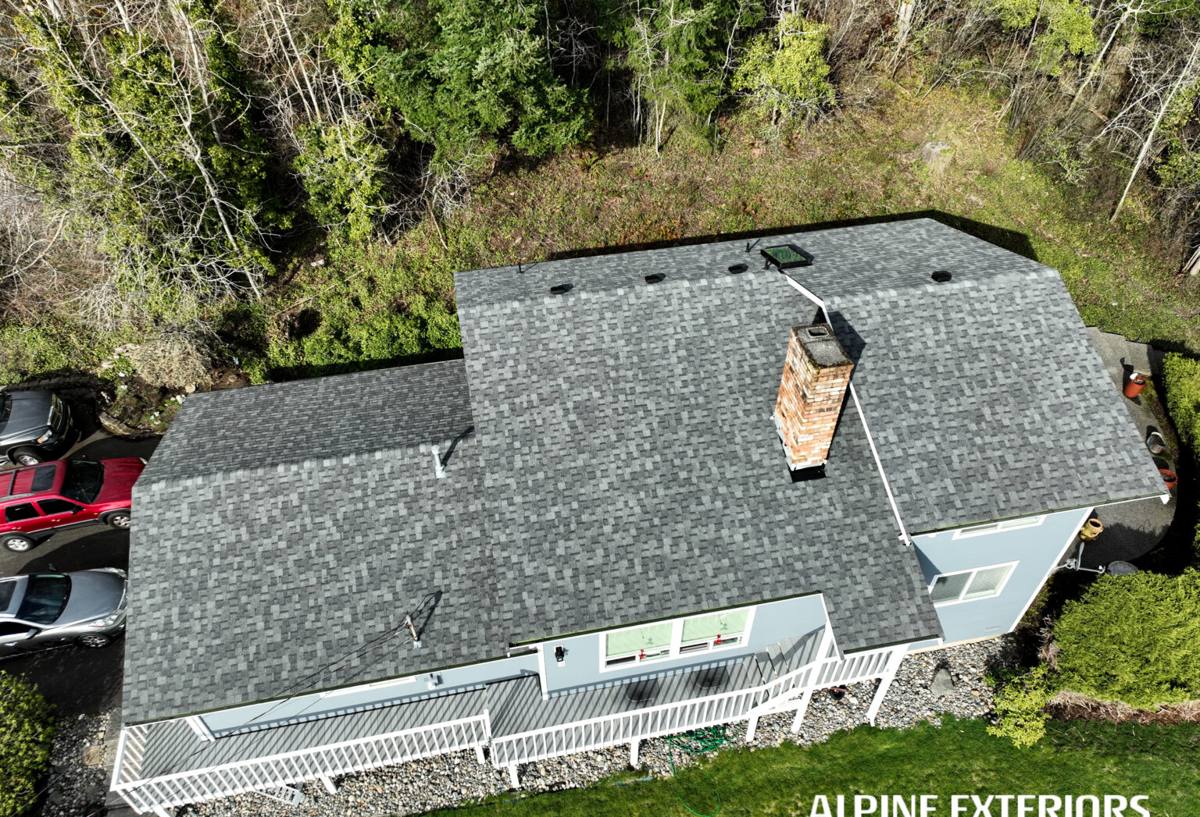
A roof built to shed rain falling straight down isn't automatically built to handle rain coming in sideways. Wind-driven rain — the kind that hits a roof plane at an angle during a coastal storm — pushes water uphill under shingle laps and around flashing in a way that ordinary rainfall never tests. Valleys, chimney flashing, skylight curbs, and the edges where two roof planes meet are where this shows up first, because those are the spots where water is already trying to find a path and wind gives it the extra push it needs.
Why Bow's Setting Makes Storm Damage Worse
Bow doesn't have the built-up density of a town like Anacortes proper — it's a mix of farmland, open lots, and homes with more sky and open water exposure around them. That means less natural windbreak from neighboring structures and mature tree cover, and it means storms coming off Samish Bay arrive with less resistance before they reach a roofline. Add in the salt-laden air that travels well inland from the water during winter weather, and you've got a combination that accelerates corrosion on nails, flashing, and any exposed metal fastener at the same time wind and rain are testing the roof's weak points.
Skagit County's long moss season compounds this. Moss holds moisture against a roof surface for months at a stretch, and a shingle edge that's already been lifted slightly by moss growth is far more vulnerable to a storm finishing the job than a clean, well-maintained roof plane would be. We see this combination — moss-softened shingles plus a wind event — cause damage that a drier, moss-free climate simply wouldn't produce from the same storm.
Common Signs of Storm Damage
Some storm damage is obvious. Most of it isn't, at least not from the ground. After any significant wind or rain event in the Bow area, it's worth walking the property and checking for the following:
- Shingles that look lifted, curled, or out of alignment compared to the rest of the roof plane
- Granules collecting in gutters or at downspout outlets — a sign of shingle surface wear from wind abrasion
- Bent, lifted, or missing flashing around chimneys, skylights, and roof-wall intersections
- Soft or discolored ceiling spots inside the house, especially near exterior walls or below valleys
- Visible daylight or gaps in the attic where there shouldn't be any
- Debris, branches, or heavier moss buildup than usual sitting on the roof surface after a storm
None of these guarantee a major repair is needed, but any one of them is worth a professional look before the next storm arrives.
What a Correct Storm Damage Repair Involves
A repair that only replaces the shingles a homeowner can see from the ground is treating the symptom and skipping the cause. Correct storm repair starts with getting on the roof and checking the decking underneath any compromised area for soft spots or water staining, confirming the underlayment is intact, and inspecting flashing at every valley, penetration, and roof-wall intersection near the damage — not just the spot that looks obviously broken. Fastener condition matters too, especially given how much faster salt air corrodes exposed metal here than it would further inland.
Temporary Protection vs. Permanent Repair
When damage is fresh or a follow-up storm is expected soon, the right first move is often a temporary dry-in — tarping or sealing the compromised area to stop active water intrusion — followed by the permanent repair once materials and scheduling allow. Skipping straight to a permanent patch without stopping ongoing water entry first can mean sealing moisture into the roof assembly, which causes problems that take much longer to surface and cost more to fix.
Matching Materials So the Repair Doesn't Stand Out
One of the more common complaints we hear about prior repair work isn't that it failed — it's that it looks obviously patched, with mismatched shingle color or a different granule pattern standing out against the rest of the roof. We do our best to match existing shingle brand, color, and profile as closely as current material availability allows, and we're upfront when an exact match isn't possible due to sun fading on the older shingles or a discontinued product line. A repair should protect the house first and blend in a close second, but it shouldn't look like an afterthought either.
What Determines Repair Scope and Cost
Not every storm-damaged roof needs the same level of work. The right scope depends on how far the damage extends and how long it's likely been present before it was caught.
| Damage Level | What It Typically Looks Like | Typical Repair Scope |
|---|---|---|
| Minor | A few lifted or missing shingles, no visible interior signs | Localized shingle and flashing repair |
| Moderate | Damage across one roof section, some granule loss, possible minor decking softness | Section repair with decking spot-replacement as needed |
| Significant | Interior staining, multiple compromised areas, visible flashing failure | Larger repair or partial re-roof of the affected slope |
| Severe | Structural decking damage, active leaks, widespread shingle loss | Full slope or full roof replacement likely required |
The only reliable way to know which category a given roof falls into is a physical inspection. We won't quote a scope of work over the phone based on a description alone, because the difference between minor and significant often isn't visible until someone is actually standing on the roof.
Documenting Damage for Insurance
Most storm damage repairs in Bow involve an insurance claim, and how the damage is documented affects how smoothly that process goes. We photograph the damage before starting any repair work, note the likely cause and extent in plain terms, and provide a written scope of work that a homeowner can hand to their adjuster. We're not the insurance company and can't promise how a claim will be handled, but a clear, honest record of what we found and what we did tends to make that conversation easier rather than harder.
Our Process for Bow Storm Repairs
- Initial contact and, when conditions require it, temporary protection to stop active water intrusion
- On-roof inspection of shingles, flashing, decking, and attic condition in the affected area
- Written scope of work and straightforward pricing before any repair work begins
- Permanent repair using materials matched as closely as possible to the existing roof
- Final walkthrough so you can see exactly what was done and ask questions before we consider the job finished
Why a Local Anacortes Crew Matters for Bow Storm Calls
Bow isn't a dense subdivision where every roof faces the same direction and takes the same weather. Properties here sit differently relative to the bay, open farmland, and whatever tree cover happens to be nearby, and that changes which slope takes the worst of a given storm and which flashing details are most likely to have failed. A crew based in Anacortes and working this part of Skagit County regularly has a working sense of those patterns — which roof orientations we expect to find lifted shingles on after a southwesterly blow, which valleys tend to show flashing wear first, and how much moss buildup is normal versus a sign of a bigger problem. That local familiarity speeds up the inspection and helps make sure the repair addresses the actual cause, not just the visible symptom.
Reducing the Odds of Repeat Damage
A storm repair is a good moment to address the conditions that made the damage worse than it needed to be in the first place. If moss buildup contributed to lifted shingles, that's worth treating as part of the repair rather than leaving it to work on the new material the same way it did the old. If a particular slope or valley took damage because of a marginal flashing detail from the original installation, that's worth correcting rather than repeating. None of this turns a repair into a full re-roof — it just means fixing the storm damage without ignoring why it happened.
If a recent storm has left your Bow roof looking questionable, or you'd just like a professional set of eyes on it before the next one hits, we're happy to take a look. Reach out for a free, no-pressure estimate — we'll walk the roof, explain what we find in plain terms, and lay out your options honestly, whether that's a small repair or something more.