 Anacortes Siding
 A roof along Similk Bay takes weather most inland Skagit County homes never see. Storms coming off the water bring wind that hits from angles a sheltered lot rarely deals with, rain that drives sideways into laps and flashing instead of just running off, and tree cover that keeps roof planes wet and vulnerable long after the wind dies down. When a storm damages a roof out here, the fix isn't just patching what's visibly broken — it's understanding how that damage happened in the first place and repairing it so the same weather doesn't reopen the problem next season.
This page covers what storm damage roof repair actually involves for a home in Similk Beach: how to recognize damage before it turns into a bigger problem, what a correct repair looks like, how we decide between a repair and a full replacement, and what our process looks like from first call to final walk-through.
Why Storm Damage Hits Similk Beach Roofs Differently
Similk Beach sits along the water on a wooded, semi-rural stretch of Skagit County, and that combination of shoreline exposure and heavy tree cover creates a specific set of storm risks that don't line up neatly with a generic roofing checklist.
Wind Off the Water
Storms tracking in off the Salish Sea can hit a waterfront-adjacent roof with sustained wind and gusts that a more sheltered inland property doesn't experience to the same degree. That wind load is what lifts shingle tabs, works fasteners loose, and peels back ridge caps and ridge vents that were only marginally secured to begin with. Once a wind event opens even a small gap, the next rain finds it immediately.
Driving Rain and Wind-Driven Intrusion
Rain during a Similk Beach storm rarely falls straight down. Wind pushes it sideways and up under shingle edges, around vent penetrations, and into flashing joints that would stay dry in a calmer rain event. This is why storm damage often shows up as an interior leak in a spot that looks completely fine from the ground — the water got in through a wind-driven path, not a hole you could spot from the yard.
Moss, Tree Cover, and Delayed Drying
Similk Beach's wooded lots mean a lot of roof area sits shaded for long stretches of the day, and shaded roofing stays wet longer after any storm passes. That extra moisture time feeds moss and organic growth, which in turn holds water against damaged shingles or exposed underlayment and slows down natural drying between storms. A repair that doesn't account for this reality tends to fail again sooner than one that does.
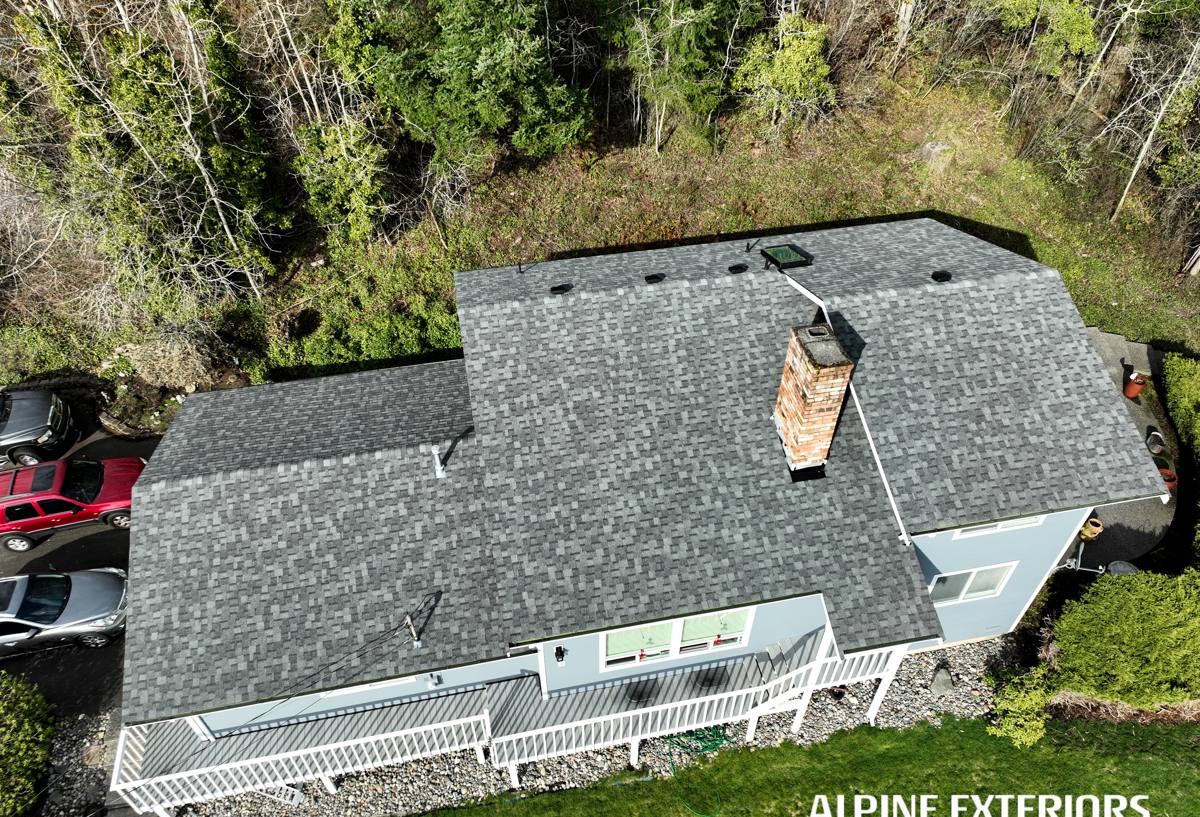
Recognizing Storm Damage Before It Becomes a Bigger Problem
Not all storm damage is obvious. Some of it is visible from the ground; some of it only shows up once you know where to look.
- Missing, cracked, or curled shingles, especially on wind-exposed slopes facing the water
- Lifted or displaced ridge caps and ridge vents after a windstorm
- Fallen branches or debris resting on the roof, even if no obvious puncture is visible
- Dented or creased metal flashing, gutters, or vent stacks
- Water stains on ceilings or in the attic that appeared or worsened after a storm
- Granules collecting heavily in gutters or downspouts following high wind
- Soft spots or discoloration on the roof deck visible from inside the attic
- New or worsening moss growth in a spot where shingles were disturbed or damaged
Any one of these on its own might be minor. Two or three together after the same storm usually means it's worth a proper inspection rather than a wait-and-see approach.
What a Correct Storm Damage Repair Involves
Storm repair isn't just about closing the visible gap. It's about understanding what actually failed and fixing that, not just the symptom sitting on top of it.
Emergency Tarping and Mitigation
When a roof has active damage and more weather is on the way, the first priority is stopping additional water intrusion, not doing the permanent repair on the spot. A properly secured tarp, fastened so wind can't work it loose, buys time to assess the damage correctly and plan the actual fix rather than rushing a patch that has to be redone anyway.
Full Roof Assessment
Once the immediate risk is controlled, we walk the full roof, not just the obviously damaged section. Wind and driving rain rarely damage only one isolated spot — a storm strong enough to tear off a section of shingles has usually stressed fasteners, flashing, and ridge details elsewhere on the roof too, even where nothing looks wrong yet. We also check the attic side for water staining or deck moisture that points to intrusion the exterior alone doesn't reveal.
Matching Materials and Proper Flashing Repair
A storm repair should blend into the existing roof, not stand out as an obvious patch, and it should address the flashing and underlayment around the damaged area, not just the shingles on top. Loose or corroded fasteners get replaced, damaged flashing at valleys or penetrations gets rebuilt rather than caulked over, and underlayment gets restored to its original coverage so the repair holds up the same way the rest of the roof does.
Repair or Replace? How We Make the Call
Storm damage doesn't automatically mean a full replacement, and it doesn't automatically mean a simple patch either. The right call depends on the roof's age, how widespread the damage is, and what condition the rest of the roofing system is in.
| Factor | Points Toward Repair | Points Toward Replacement |
|---|---|---|
| Roof age | Roof is well within its expected service life | Roof is already near or past its rated lifespan |
| Damage extent | Damage is isolated to one section or slope | Damage is spread across multiple slopes or the whole roof |
| Deck condition | Deck underneath is sound with no rot | Soft or rotted decking found during inspection |
| Prior condition | Roof was in good shape before the storm hit | Roof already showed significant wear, moss, or prior leaks |
| Material availability | Matching shingle or material is still available | Original product is discontinued and patches would be visibly mismatched |
We'll walk you through where your roof actually falls on this list during the inspection, with honest reasoning either way. A repair that's genuinely sufficient is the right call; a repair that's just delaying an inevitable replacement isn't doing you any favors.
Working With Insurance on a Storm Claim
Most storm damage repairs in Similk Beach involve an insurance claim, and the documentation matters as much as the repair itself. We photograph and document damage thoroughly before any tarping or repair work covers it up, which gives you and your adjuster a clear record of what actually happened. We can walk an adjuster through the roof directly and explain what we're seeing in plain terms, though the claim decision itself is always between you and your insurance company — we don't make promises about coverage or claim outcomes, since that's not our call to make.
What we can promise is an honest, itemized scope of the actual repair needed, written in language that holds up whether you're paying out of pocket or working through a claim. A vague estimate makes both the repair and the claims process harder than they need to be.
Our Storm Damage Repair Process
- Initial call and mitigation. If water is actively getting in, we prioritize getting a secure tarp in place before anything else.
- Full inspection. We walk the entire roof and check the attic, not just the section that looks obviously damaged.
- Documentation. We photograph the damage in detail, useful whether you're filing an insurance claim or just want a clear record.
- Written scope and estimate. You get a clear breakdown of what needs repair, what materials are involved, and honest reasoning on repair versus replacement.
- Repair work. Damaged shingles, flashing, and underlayment are properly replaced and integrated with the surrounding roof, not just patched on the surface.
- Final walk-through. We review the completed repair with you and answer any remaining questions before we call the job done.
Why Hire a Crew That Already Works Similk Beach
A roofer who mainly works sheltered, inland jobs isn't wrong about roofing in general — they just haven't seen how a waterfront, tree-covered lot in Similk Beach actually behaves during a storm. We've climbed enough roofs in this specific stretch of Skagit County to know which slopes catch the worst of the wind off the water, which shaded sections hold moisture and moss longest after a storm, and which flashing details are the ones that actually fail here versus the ones that are just code minimums on paper.
That local experience shapes the repair itself. It's the difference between a patch that gets you through until the next big blow and a repair that's actually built for the conditions this property sees every winter.
Protecting Your Roof Between Storms
A well-executed repair still benefits from some ongoing attention given what this location deals with year-round:
- Trim back tree limbs overhanging the roof before they become storm debris
- Keep gutters and downspouts clear so wind-driven rain has somewhere to go
- Have moss addressed on shaded slopes before it spreads across a full roof plane
- Check the attic after major storms for early signs of water intrusion, not just after a leak shows up inside
- Have flashing points inspected periodically, since that's where most storm-related leaks actually start
If your Similk Beach roof took a hit in a recent storm, or you just want a professional set of eyes on it before the next one rolls through, we're glad to take a look. Reach out using the form below for a free, no-pressure estimate.