 Anacortes Siding
 West Anacortes sits closer to open water than most of the surrounding area, and that changes what a window has to do here. It's not just about keeping heat in during a cold snap — it's about keeping salt-laden air, wind-driven rain, and months of damp, mossy weather from working their way into a window assembly that was never built to shrug all of that off at once. When we talk about energy-efficient windows for this part of Anacortes, we're talking about a job that has to solve two problems at the same time: cutting heat loss and standing up to a coastal climate that's harder on windows than most manufacturers' standard guidance assumes.
Why West Anacortes Homes Need This Done Right
A lot of homes on the west side of Anacortes were built with single-pane or early-generation dual-pane windows that were adequate for their era but are genuinely inefficient by today's standards. Old glazing, thin vinyl or aluminum frames, and worn-out weatherstripping let conditioned air leak out and cold, damp outside air leak in — which shows up as higher heating bills, cold drafts near the glass, and condensation on the inside of the window during Skagit County's wetter months. Replacing those windows with properly sized, correctly glazed, and correctly installed energy-efficient units addresses the comfort and cost problem directly. But in this part of Anacortes, the efficiency upgrade only holds up long-term if the installation also accounts for the climate the window has to live in.
That's the piece that gets missed most often. A window can have excellent glass and a strong energy rating on paper and still underperform within a few years if it wasn't flashed, sealed, and fitted correctly for a site with more direct exposure to wind and moisture off the water. Efficiency and weatherproofing aren't separate jobs here — they're the same job.
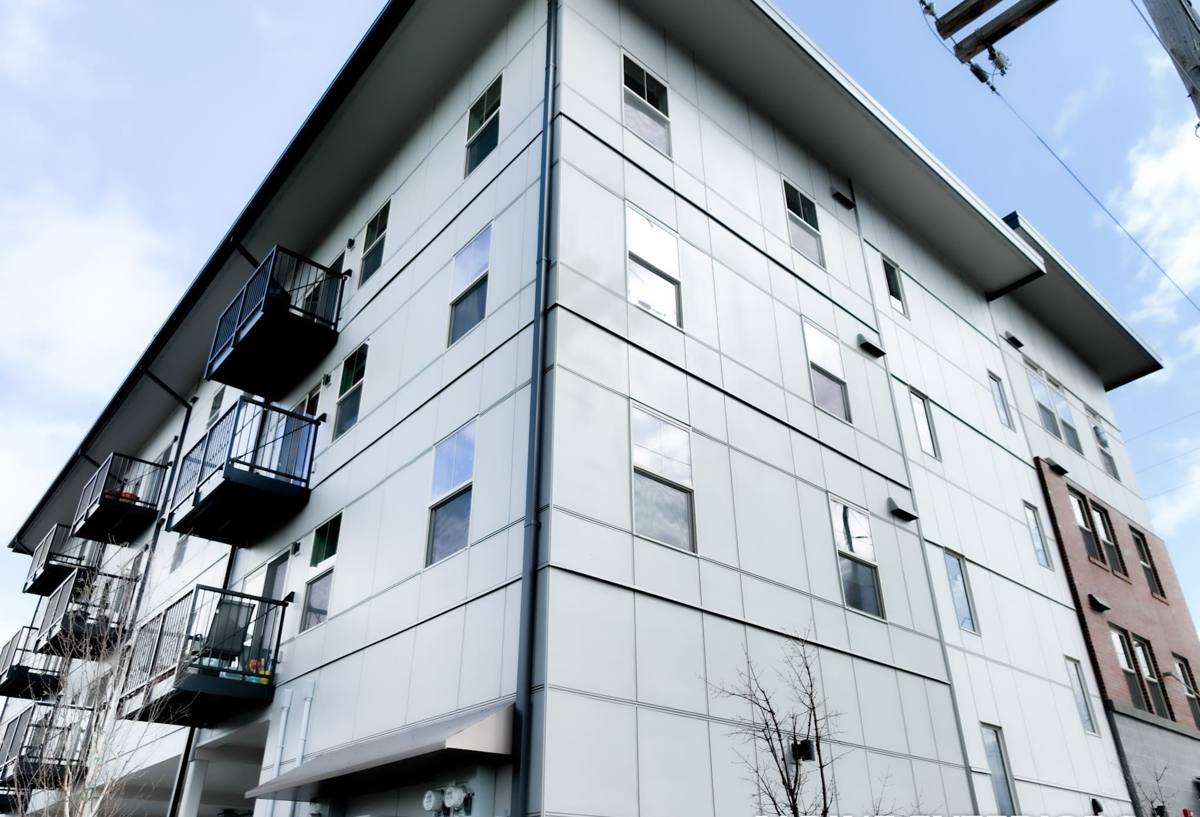
The Climate Factor: Salt Air, Driving Rain, and Moss
Homes closer to the water on Anacortes's west side deal with a more aggressive version of Skagit County's marine climate. Salt-laden air accelerates corrosion on window hardware, screws, and lower-grade frame components faster than it would further inland. Storms coming off the water drive rain sideways into wall and window assemblies instead of letting gravity do the work, which means any gap in the flashing or sealant gets tested repeatedly over a wet season that runs long here. And shaded, damp corners of a property — common on lots with tree cover or a north-facing wall — support moss and organic growth for much of the year, holding moisture against sills, trim, and the lower edges of window frames far longer than a drier climate ever would.
None of that is a reason to avoid upgrading windows — it's the opposite. Old, degraded windows are already the weak point in a home's building envelope, and every one of those conditions makes a failing window worse faster. The point is that the new windows, and the installation around them, need to be chosen and built with this specific exposure in mind rather than treated like a standard inland replacement.
Where the Energy Loss Actually Happens
It's rarely just the glass. Heat loss and moisture intrusion around an aging window usually concentrate at a handful of predictable spots: gaps around the frame where old caulk has failed, worn weatherstripping that no longer seals tight against wind pressure, and sill areas where years of standing moisture have softened wood or degraded the flashing underneath. A correctly installed energy-efficient window fixes the glass performance, but the job isn't complete unless those surrounding failure points get addressed too — otherwise you've paid for better glass sitting in the same leaky opening.
What "Energy-Efficient" Actually Means for a Window
The term gets used loosely, so it's worth breaking down what actually drives performance. Three numbers matter most: U-factor (how well the window resists heat flow — lower is better), Solar Heat Gain Coefficient or SHGC (how much solar heat passes through the glass), and air leakage rating (how much air moves through the assembly under pressure). Beyond the glass package, frame material plays a real role in both efficiency and how the window holds up to this specific climate.
| Frame Material | Efficiency | Coastal Durability | Maintenance |
|---|---|---|---|
| Vinyl | Good — multi-chamber designs insulate well | Handles salt air and moisture without corroding | Low — no painting, won't rot |
| Fiberglass | Very good — low expansion, tight seals hold up over time | Excellent — resists corrosion and moisture-driven warping | Low to moderate |
| Aluminum | Weaker unless thermally broken — conducts heat and cold | Prone to corrosion in salt air unless properly finished | Moderate — finish wears over time |
| Wood / wood-clad | Good, especially with a clad exterior | Exterior wood faces exposed to this climate needs consistent upkeep | Higher — exterior finish and moisture management matter a lot |
For most West Anacortes homes facing direct wind and rain, we lead with vinyl or fiberglass frames on the weather-facing sides of the house, because they hold up to sustained coastal moisture with the least ongoing maintenance. Wood-clad units can still be the right call where the interior look matters most and the exterior cladding is genuinely protected — that's a conversation we have honestly, based on the specific opening and exposure, not a one-size answer.
What a Correct Installation Involves
Assessment and Measurement
Every job starts with an honest look at the existing opening — not just the window itself, but the condition of the framing, sill, and flashing underneath it. On older West Anacortes homes, this is often where we find out whether previous window installs were sealed correctly the first time, or whether moisture has already gotten into the wall assembly around the opening. That gets addressed before a new, more efficient window ever goes in, because installing a better window into a compromised opening just delays the same problem.
Flashing and Air Sealing
This is the step that determines whether an energy-efficient window actually performs like one for the long haul in this climate. Correct flashing sheds wind-driven rain away from the wall assembly instead of letting it collect at the sill or behind the trim. Correct air sealing around the frame — using the right sealants and backer materials, not just a bead of caulk — is what actually delivers the air-leakage performance the window's rating promises. Skip or rush either step, and you can end up with a high-efficiency window that still drafts and still lets moisture in around the edges.
Interior and Exterior Finish
Once the window is set, shimmed level and square, and properly sealed, the trim and finish work ties it back into the rest of the house. On the exterior, that finish work also plays a role in long-term durability — trim and sill details that shed water instead of trapping it against the frame matter more here than in a drier climate, given how long the moss season keeps surfaces damp.
A Practical Checklist Before You Commit to a Window Project
- Ask for the U-factor, SHGC, and air-leakage rating on the specific windows being quoted — not just a general "energy-efficient" claim
- Confirm the existing opening will be inspected for hidden rot or old flashing failures before the new window goes in
- Ask what flashing and air-sealing method will be used, and why, for a west-facing or water-exposed opening
- Get clear on what's covered under warranty — the window unit and the installation labor are often separate
- Ask how frame material choice was made for your specific exposure, not just what's cheapest to install
- Get a realistic timeline in writing, since better-performing units are sometimes special order rather than off the shelf
Our Process, Start to Finish
- On-site assessment — we inspect the existing windows, framing, and sill condition, and check for any moisture history around the opening
- Honest recommendation — glazing package, frame material, and installation approach matched to your home's exposure, explained in plain terms
- Ordering — we confirm sizing and give you a realistic lead time before you commit to a schedule
- Removal and opening prep — old windows come out carefully, and any hidden rot or flashing issues get corrected before the new unit goes in
- Installation, flashing, and air sealing — the new window is set, shimmed, flashed, and sealed to hold up to wind-driven rain and salt air, not just pass a quick inspection
- Trim and finish — interior and exterior finish work completed to match the rest of the house and shed water correctly at the sill
Costs and Trade-Offs
We won't quote a number without seeing the openings and the home, but the factors that consistently move price on an energy-efficient window project are worth knowing up front.
| Factor | Why It Matters |
|---|---|
| Glazing package | Double vs. triple pane, low-E coatings, and gas fills all affect both performance and cost |
| Frame material | Vinyl is typically the most budget-friendly; fiberglass costs more but holds up longest in salt air with less upkeep |
| Opening condition | Rot, old flashing failures, or out-of-square framing add repair work before the new window goes in |
| Number of windows | A full-house replacement typically has better per-unit pricing than one or two windows at a time |
| Window size and type | Larger units and operable styles like casements cost more than smaller fixed windows |
| Access and site conditions | Second-story or hard-to-reach openings add labor time regardless of window type |
It's reasonable to replace windows in phases — the most exposed, worst-performing openings first — rather than all at once, and we'll help you prioritize based on condition and exposure if budget makes that the right approach.
Why a Crew That Already Works West Anacortes Matters
Manufacturer installation instructions are written for average conditions, and homes closer to open water on Anacortes's west side don't experience average conditions. A crew that has actually flashed openings against wind-driven rain in this specific area, dealt with corroded hardware on salt-exposed frames, and seen how long moss and moisture sit against a sill here knows which parts of the standard installation guidance are worth extra time and attention in this climate — and which corners genuinely can't be cut, even when they'd get away with it in a drier, calmer market.
That local experience shows up in decisions that never make it into a sales pitch: how much overlap a flashing course needs on a west-facing opening, which sealants actually hold up under sustained salt exposure, and when a sill needs a sloped detail instead of relying on caulk alone. Those choices are what decide whether an energy-efficient window is still performing — sealed, draft-free, and rot-free — in fifteen years, or showing problems in five.
Ready When You Are
If your windows are drafty, fogging between the panes, or just old enough that you're wondering whether they're costing you money every month, it's worth having someone look at the actual openings before you start comparing quotes. We offer free, no-pressure estimates for energy-efficient window projects in West Anacortes and the surrounding Skagit County area — use the form below to get a time on the schedule.