 Anacortes Siding
 Why West Anacortes Siding Wears Out Faster Than Homeowners Expect
Fidalgo Island sits where Puget Sound weather meets open marine water, and homes on the west side of Anacortes catch the full effect of it. Salt-laden air off the surrounding waters accelerates corrosion on fasteners, trim, and any siding material that isn't built to resist it. Add Skagit County's long wet season — months of driving rain pushed sideways by wind off the water — and you have conditions that find every weak seam, every under-flashed window, and every spot where the original siding wasn't sealed correctly the first time.
Then there's moss. West Anacortes stays shaded and damp for a large part of the year, and moss doesn't need much encouragement to take hold on north-facing walls, under eaves, and anywhere siding stays wet longer than it should. Moss holds moisture against the wall assembly, and moisture held against wood-based or improperly sealed siding is exactly how rot gets started behind a wall you can't see.
None of this means West Anacortes is an unusually hostile place to own a home. It means the siding has to be matched to the climate, and it has to be installed correctly the first time. A lot of what looks like premature siding failure in this part of Anacortes isn't a bad product — it's a product that was never suited to salt air and sustained moisture, or a good product installed without the flashing and drainage details this climate demands.
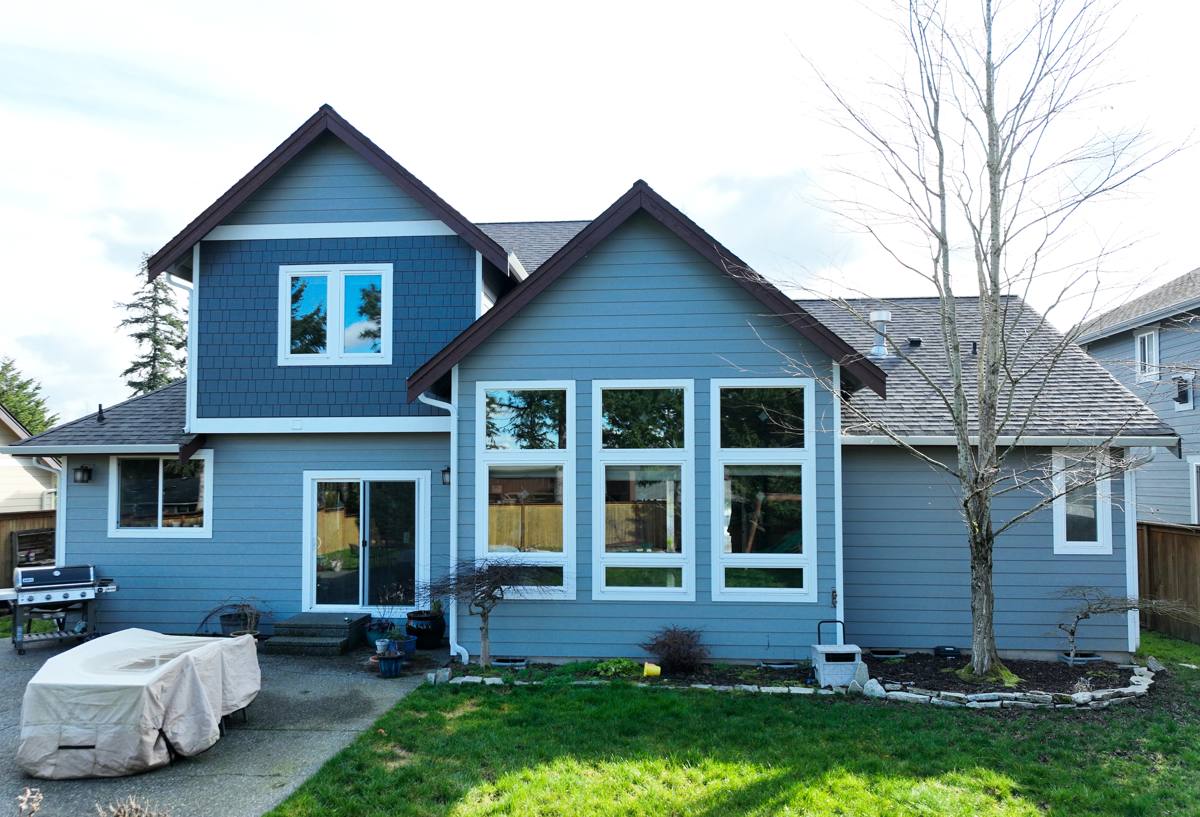
Signs a West Anacortes Home Needs Siding Replacement, Not Another Repair
Homeowners often call us for a repair quote and end up needing a full siding conversation instead. Here's how to tell which situation you're in before a contractor even shows up:
- Soft or spongy spots when you press on the siding, especially near the bottom courses or below windows
- Paint that keeps failing in the same spots within a year or two of repainting
- Visible gaps, warping, or buckling panels, particularly on walls facing prevailing wind and rain
- Persistent moss or dark streaking that comes back within months of cleaning
- Soft trim boards or corner boards, which usually means moisture has been getting behind the siding for a while
- Rising energy bills with no other explanation, which can point to a compromised weather barrier
One or two of these on a single wall might be a repair. Several of these across multiple elevations usually means the siding system as a whole — not just the visible panels — has been letting moisture in, and patching individual boards won't fix what's happening underneath.
What a Correct Siding Replacement Actually Involves
It's Not Just Swapping Old Boards for New Ones
A siding replacement done right is really a re-do of the entire wall assembly's weather protection, not a cosmetic swap. That means:
- Full removal of the old siding down to the sheathing, so we can actually see what's underneath
- Inspection and repair of any rotten or water-damaged sheathing before anything new goes on
- A new weather-resistant barrier (house wrap) installed and lapped correctly, shingle-style, so water sheds outward instead of pooling behind laps
- Correct flashing at every window, door, deck ledger, and roof-to-wall intersection — this is where most siding failures actually start, not in the field of the wall
- Proper fastener placement and spacing per the manufacturer's installation instructions, not just "close enough"
- Rainscreen or drainage gap detailing where called for, so any incidental moisture has somewhere to go
Skip any of these steps and you can end up with brand-new siding that fails in the same places the old siding did — just on a longer timeline. In a climate like West Anacortes, the flashing and drainage details matter as much as the siding material itself.
Why We Only Install James Hardie Fiber Cement
We install one siding system: James Hardie fiber cement. We don't offer LP SmartSide, vinyl, Cemplank, Allura, primed spruce, or cedar, and that's a deliberate standard, not a limitation of what we know how to install.
Fiber cement is non-combustible, which matters increasingly in Washington. It doesn't absorb and swell with moisture the way wood-based composite products can, which matters directly in a climate with this much sustained rain and humidity. Vinyl can crack in cold snaps and fade or warp under sun exposure, and it relies almost entirely on the wall assembly behind it for moisture management since the panels themselves aren't a true water barrier. Cedar and primed wood siding need ongoing maintenance — repainting, caulking, moisture monitoring — that most homeowners don't want to keep up with year after year on a coastal home.
James Hardie's HZ5 product line is engineered specifically for climates with freeze-thaw cycling and sustained moisture exposure, which describes the Pacific Northwest well. The factory-applied ColorPlus finish is baked on under controlled conditions, resists fading and chipping far better than field-applied paint, and comes with its own finish warranty on top of Hardie's product warranty. When it's installed correctly — the flashing, the fastening, the clearances — it's a system built to handle salt air and driving rain for decades, not just look good on installation day.
We're not saying every other product on the market is unusable. We're saying that after years of tearing old siding off West Anacortes homes and seeing what failed and why, fiber cement installed to spec is what we're willing to put our name behind.
Our Siding Replacement Process
From First Look to Finished Wall
1. On-site assessment. We look at every elevation, check for soft sheathing, evaluate existing flashing, and talk through what we're seeing with you directly — no guessing from a photo.
2. Detailed estimate. You get a clear breakdown of material, labor, and any sheathing repair that's likely needed, so there aren't surprise change orders mid-project.
3. Tear-off and inspection. Old siding comes off, sheathing gets inspected and repaired as needed, and we document anything that needs to be addressed before moving forward.
4. Weather barrier and flashing. New house wrap, correctly lapped, with flashing at every penetration and transition point.
5. Hardie installation. Panels, fasteners, and clearances installed to James Hardie's specifications — this is what keeps the manufacturer's warranty intact and keeps water out for the long run.
6. Trim, caulking, and final finish. Corner boards, trim, and sealant details finished to match the ColorPlus system.
7. Final walkthrough. We go over the finished work with you before calling the job done.
What Siding Replacement Typically Costs
Every home is different, and the only way to get an accurate number is a site visit — but these are the factors that move the price up or down on most West Anacortes projects:
| Cost Factor | Why It Matters |
|---|---|
| Home size and number of stories | More wall area and taller walls mean more material and more labor, including staging/scaffolding |
| Condition of the sheathing underneath | Rot or water damage found during tear-off adds repair scope before new siding can go on |
| Siding profile and Hardie product line | Lap siding, shingle-style panels, and board-and-batten each have different material and labor costs |
| Trim and architectural detail | Corner boards, window trim, and multiple roof lines all add labor time |
| Access and site conditions | Tight lots, slopes, or landscaping close to the house can affect staging and cleanup |
| Existing paint or hazardous materials | Older homes may need testing and special handling before tear-off begins |
Be cautious of any bid that's dramatically lower than the others without a clear explanation — it usually means something is being left out, whether that's sheathing repair, proper flashing, or manufacturer-spec installation.
Choosing a Siding Contractor Who Actually Works West Anacortes
A crew that regularly works this part of Anacortes knows how prevailing wind and rain hit different elevations of a home here, where moss tends to establish first, and how much drainage detailing a wall actually needs given how much moisture it will see over a Skagit County winter. That's not something a contractor coming in from outside the area picks up on the first job.
Before hiring anyone for a siding replacement, it's worth asking:
- Are you a certified or preferred installer for the specific siding product you're proposing?
- What's your process for handling sheathing damage found after tear-off?
- Can you walk me through your flashing details at windows, doors, and roof lines?
- What warranty covers the product, and what warranty covers your labor?
- Do you carry current liability insurance and workers' comp coverage?
- Can I see other siding jobs you've completed in this area?
A contractor who's confident in their work will answer these without hesitation. Vague answers about flashing or warranty coverage are a sign to keep looking.
Keeping New Siding Looking Right in This Climate
Once new Hardie siding is up, upkeep is minimal compared to wood or vinyl, but it's not zero. A yearly rinse-down helps keep salt residue and moss spores from establishing, especially on shaded, north-facing walls. Keep gutters clear so overflow isn't running down the wall face, and trim back vegetation that's holding moisture against the siding. Beyond that, ColorPlus-finished Hardie siding is built to go a long time without repainting, which is a real difference from the maintenance cycle wood or field-painted siding demands in this climate.
If your West Anacortes home is showing signs of siding failure, or you just want an honest read on what shape your current siding is in, we're happy to take a look. Reach out for a free, no-pressure estimate — we'll tell you straight what we see and what your options actually are.