 Anacortes Siding
 Fidalgo Island Puts Windows Through a Lot
Fidalgo Island sits right where the Salish Sea, the Strait of Juan de Fuca, and Skagit County's marine weather all meet. That's part of why people love living here, but it's hard on a house. Windows on this island deal with salt-laden air blowing off the water, wind-driven rain that hits siding sideways instead of falling straight down, and a wet season that stretches on long enough to grow moss on anything that stays damp. None of that is unique to any one street or neighborhood on the island — it's just what comes with living this close to open water in Western Washington.
Windows are one of the first places that weather finds a way in. A wall assembly can be well-built and still fail at the window opening if the flashing, sealant, or frame material wasn't chosen and installed with this specific climate in mind. That's the gap we focus on closing.
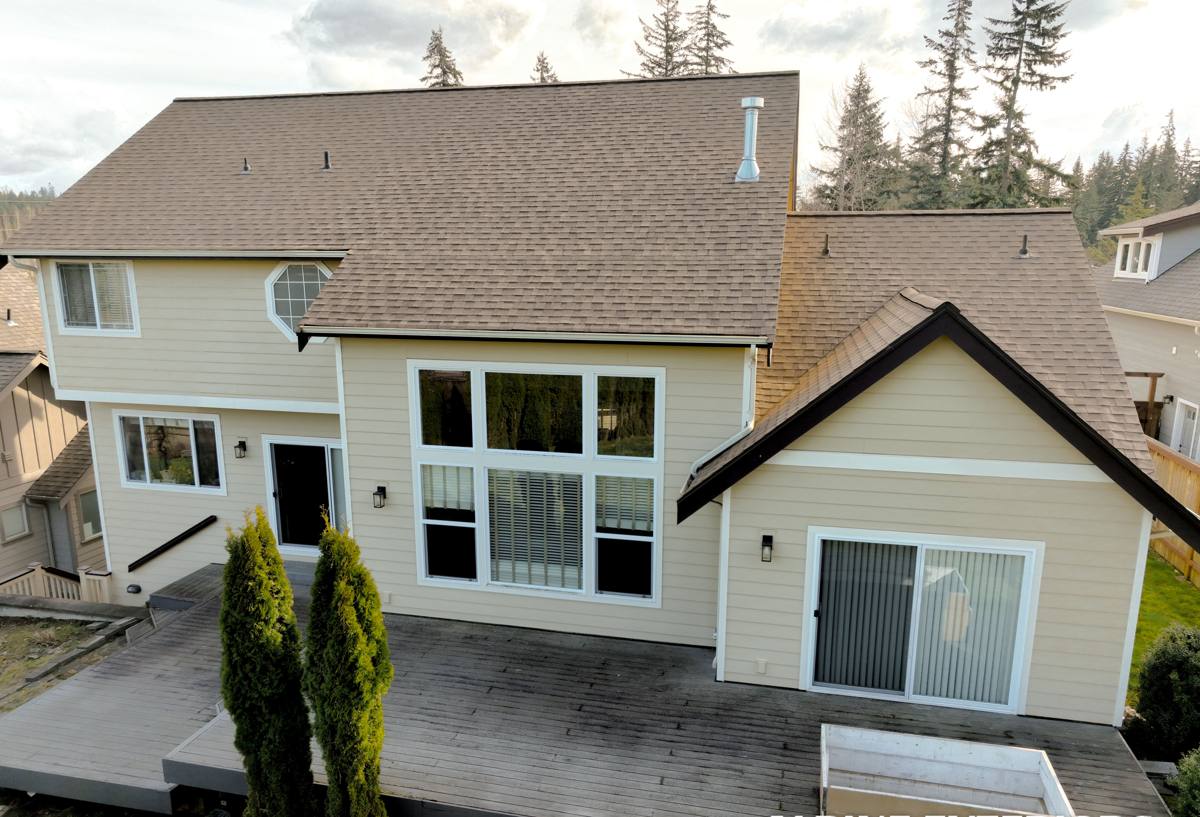
What Salt Air, Driving Rain, and Moss Actually Do
Each of these has a different failure mode, and a good installation has to account for all three at once.
Salt Air
Airborne salt accelerates corrosion on metal window hardware, fasteners, and some low-grade aluminum components. It also breaks down certain sealants and finishes faster than they'd wear in an inland climate. Hardware and sealants rated for coastal exposure hold up considerably longer than standard-grade products.
Driving Rain
Wind off the water doesn't let rain fall straight down — it drives it horizontally into siding and window openings. A window that would stay dry in calm rain can still take on water at the sill or jamb if the flashing wasn't lapped correctly to shed water outward and downward, not into the wall cavity.
Long Moss Season
Fidalgo Island's overcast, wet stretches run long, and shaded exteriors under trees or on north faces rarely fully dry out. Moss and algae growth on window trim and sills isn't just cosmetic — it holds moisture against wood and paint longer, which speeds up rot and finish failure if those surfaces weren't properly sealed and detailed to shed water in the first place.
Signs Your Windows Are Losing That Battle
Most window failures show themselves gradually. Here's what we tell homeowners to watch for between now and their next inspection:
- Soft or discolored wood at the sill, especially on window-facing prevailing weather (typically west and southwest walls)
- Visible moss or dark streaking building up on trim, sills, or the siding directly below a window
- Fogging or moisture trapped between panes on double-pane units — a sign the seal has failed
- Drafts or a noticeable temperature difference near the window frame in windy weather
- Paint or caulk that's cracked, peeling, or pulling away from the frame
- Difficulty opening, closing, or locking — frames can swell or warp as they take on moisture
- Interior condensation on the glass or frame during cold, damp stretches
Any one of these on its own might just mean a caulking touch-up. Several together, especially on a house that's had the same windows for 20+ years, usually means it's worth a real look before water finds its way into the wall framing.
What a Correct Installation Actually Involves
Window installation looks simple from the outside — old window out, new window in — but the part that actually determines whether it holds up in this climate happens in layers most people never see.
Sill Pan Flashing
A sloped, waterproof pan at the bottom of the rough opening gives any water that gets past the window a way out, instead of a place to sit and soak into framing. This is one of the most commonly skipped details in older or rushed installations, and it's one of the most important in a driving-rain climate.
Integration With the Weather-Resistive Barrier
The window's flashing has to be layered with the house wrap or building paper in the correct shingle-lap order — top piece over the one below it — so water is always directed down and out, never behind the barrier. Get this order wrong and the window can look perfect while quietly feeding water into the wall.
Sealant Selection and Placement
Not every sealant is built for constant damp, salt-air exposure. We use sealants rated for exterior marine conditions, and just as important, we leave the correct weep points and gaps unsealed — sealing a window completely airtight on all four sides can trap moisture that needs to escape.
Shimming and Squaring
A window that isn't shimmed level and square will bind, won't lock properly, and puts uneven stress on the frame and seals over time — which shows up later as premature seal failure or hardware wear.
Choosing a Frame Material for a Marine Climate
Material choice matters more here than in a drier, inland climate. Here's how the common options generally compare for salt-air and wet-climate performance:
| Frame Material | Salt Air / Moisture Resistance | Maintenance | General Cost Range |
|---|---|---|---|
| Vinyl | Good — won't rot or corrode, but can become brittle with age | Low | Lower |
| Fiberglass | Very good — dimensionally stable, resists warping and corrosion | Low | Mid to higher |
| Aluminum | Fair — needs a marine-grade or thermally broken finish to avoid corrosion and condensation | Moderate | Mid |
| Wood / Wood-Clad | Fair to good with proper cladding and upkeep; exposed wood suffers in this climate | Higher | Higher |
We don't push one material on every job. A vinyl window with quality hardware is a perfectly sound, cost-effective choice for most homes here. Where we steer clients away from certain products, it's a matter of trade-offs — some finishes and hardware grades simply aren't built to hold up against sustained salt exposure, and we'd rather tell a homeowner that upfront than let it become a five-year problem.
Energy Performance and Condensation
Skagit County's climate is mild compared to much of the country, but it's damp for a large part of the year, and that changes what matters in a window's performance rating. Along with U-factor (how well the window resists heat transfer), condensation resistance is worth paying attention to — a window with poor condensation resistance will fog and sweat on the interior during our wetter, colder stretches, which can eventually lead to sill damage even on a well-installed window. Modern double- or triple-pane units with a decent condensation resistance rating handle this meaningfully better than older single-pane or early double-pane windows.
Our Process
- On-site assessment — we look at existing window condition, framing, and any signs of past water intrusion before recommending anything
- Product selection — matched to the home's exposure (waterfront-facing walls often warrant a different spec than a sheltered side)
- Careful removal — old windows come out without damaging surrounding siding or trim more than necessary
- Framing inspection — any rot or moisture damage found in the opening gets addressed before the new window goes in, not covered over
- Sill pan and flashing installation — built to shed water out and away from the wall
- Window setting — shimmed level, plumb, and square
- Sealing and weatherproofing — marine-grade sealant, correct weep points left clear
- Interior and exterior trim finish — matched to the home
- Final walkthrough — we check operation, locks, and seals with the homeowner before we consider the job done
Why a Local Crew Matters Here
A window installer who mostly works drier, inland areas isn't necessarily used to detailing for driving rain off open water or specifying hardware that holds up to salt air. Working Fidalgo Island and the greater Anacortes area regularly means we see how different products and installation details actually perform here over years, not just in a showroom or a spec sheet. That shows up in which sealants we reach for, how we flash a sill on a wall that takes rain sideways, and which hardware grades we won't put on a waterfront-facing home.
Keeping New Windows Performing
Good installation is most of the battle, but a little upkeep extends the life of any window in this climate:
- Rinse salt residue and grime off frames and glass a couple times a year, especially on water-facing sides
- Keep gutters and downspouts clear so roof runoff isn't sheeting down across window heads
- Trim back vegetation that shades windows and keeps them from drying out between rains
- Check caulking annually and touch up before small cracks let water behind the trim
- Operate locks and hardware periodically so they don't seize from disuse in damp weather
If your windows are showing their age, or you're planning ahead for a remodel, we're happy to take a look and give you an honest read on what's going on — no pressure, no obligation. Fill out the form below for a free estimate.