 Anacortes Siding
 Old Town Anacortes: An Older Neighborhood With Its Own Set of Problems
Old Town Anacortes sits among the older, established parts of the city, close enough to the water that salt air is a daily fact of life rather than an occasional nuisance. Homes here tend to be older than the citywide average, which means original or early-replacement windows that were never built to modern moisture and energy standards. When we get a call from this part of town, it's rarely "the windows look dated." It's usually "the windows don't work right anymore" — hard to open, fogged between the panes, drafty, or soft at the sill.
That distinction matters. A window that's simply out of style is a cosmetic decision. A window that's failed structurally or lost its seal is a moisture problem waiting to become a rot problem, and in a marine climate like Anacortes and the rest of Skagit County, that clock runs faster than most homeowners expect.
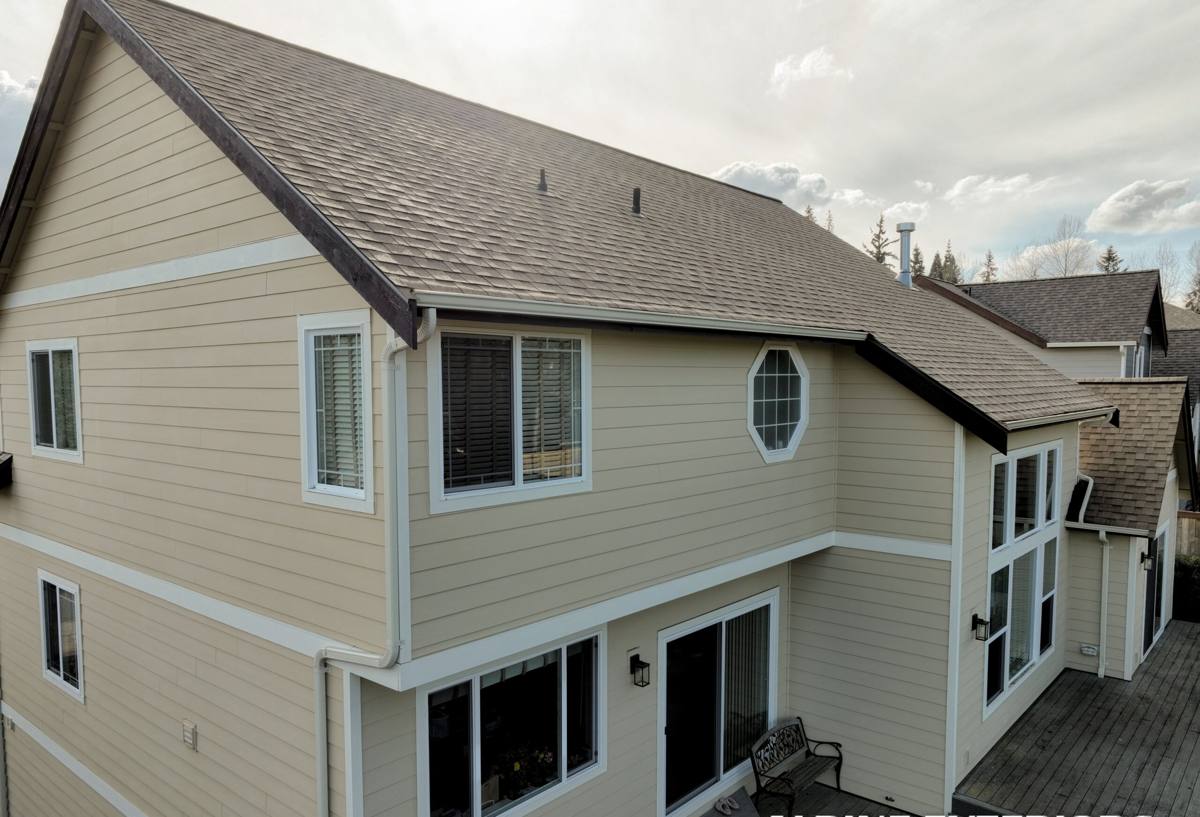
What Anacortes Weather Actually Does to a Window
Three things drive most of the window failures we see in this part of the county, and they compound each other:
Salt Air
Proximity to the water means airborne salt settles on everything, including window frames, hardware, and fasteners. Salt is corrosive to untreated metal components and can accelerate the breakdown of certain sealants and finishes over time. It doesn't damage a well-built window overnight, but it shortens the life of anything that wasn't specified for a coastal environment.
Driving Rain
Anacortes gets wind-driven rain off the water, not just straight-down rain. That matters for windows because wind-driven rain gets pushed sideways and upward into gaps that vertical rain would never reach. A window installed with standard flashing for an inland climate can still leak here if the detailing wasn't built with sideways-driven water in mind.
Moss Season
The long wet season that supports moss growth on roofs and siding also keeps trim, sills, and the wood around window openings damp for extended stretches. Wood that stays wet longer breaks down faster, and moss and organic growth around a window opening trap moisture right where you don't want it sitting.
None of this means Old Town homes need something exotic. It means the installation details — flashing, sealants, drainage, material choice — have to be right for a wet, salty, coastal environment, not just "up to code" in a generic sense.
The Age Factor: Working With Older Construction
Because much of Old Town Anacortes predates modern building practices, window replacement here often turns up conditions a newer neighborhood wouldn't have:
- Original wood-frame openings that have shifted slightly out of square over decades
- Older trim and siding materials that need careful, non-destructive removal to reuse or match
- Single-pane or early double-pane units with no modern moisture barrier behind them
- Sills and framing members that may have hidden rot from years of exposure before anyone noticed a problem
- Wiring, insulation, or plaster details around the opening that are different from what you'd find in a house built in the last 20 years
None of this is a reason to panic, and it's not automatically expensive to deal with. It's a reason to have someone open up the opening, actually look at what's there, and tell you honestly what they find — before quoting a number and before assuming a straightforward install.
What a Correct Window Installation Actually Involves
The window itself is maybe a third of the job. The other two-thirds is what happens around it, and it's the part that determines whether the installation holds up through twenty Anacortes winters or fails in five.
Removal and Inspection
Old trim and the existing unit come out carefully so we can see the actual condition of the framing, sill, and sheathing underneath. This is the point where hidden rot or old moisture damage shows up — and the point where it needs to be addressed, not covered.
Flashing and Water Management
Proper flashing directs any water that gets past the exterior finish back out, rather than letting it pool at the sill or work its way into the wall cavity. Given the driving rain this area gets, this step is not optional trim work — it's the difference between a window that sheds water and one that eventually leaks.
Air and Moisture Sealing
Modern sealants and backer rod around the frame close the gaps that cause drafts and let humid air condense inside the wall. This is also where energy performance is won or lost — a well-sealed average window will outperform a poorly-sealed premium one.
Setting, Shimming, and Fastening
The unit gets shimmed level and plumb, fastened per the manufacturer's schedule, and checked for square before anything is closed up. A window that's slightly racked in the opening will bind, won't seal evenly, and will wear its hardware out faster.
Interior and Exterior Finish
Trim goes back on (or new trim is installed to match), and the exterior is finished and caulked at the transitions where most leaks actually start.
Choosing Materials for a Coastal, Wet Climate
There's no single "best" window material for every house — it depends on the home's age, style, and budget. But some tradeoffs matter more here than they would in a drier, inland climate:
| Frame Material | How It Handles This Climate | Maintenance |
|---|---|---|
| Vinyl | Won't rot or corrode from salt air; performs well in wet climates | Low — occasional cleaning |
| Fiberglass | Very stable in temperature swings and moisture; strong long-term option near the water | Low |
| Wood (uncladded) | Classic look for older/historic homes but needs real upkeep to resist moss, rot, and moisture in this climate | High — regular painting/sealing |
| Wood-Clad (wood interior, metal or vinyl exterior) | Combines interior character with better weather resistance outside | Moderate |
| Aluminum | Durable but conducts heat/cold and is more prone to condensation issues in a wet climate | Low, but insulation performance is a tradeoff |
For homes in Old Town where matching a historic or period look matters, wood-clad or well-detailed vinyl options can usually get you the appearance without taking on the full maintenance burden of solid wood exposed to this much moisture.
Glass Package Matters Too
Double-pane with a low-E coating is the practical standard for this climate — it manages both heat loss and the condensation risk that comes with our wet winters. Triple-pane can make sense for north-facing rooms or homes right on the water where wind exposure is highest, but it's a bigger cost jump and isn't necessary for every opening.
Our Process
- On-site assessment — we look at every window being discussed, not just the ones you've noticed problems with, and check framing condition where we can
- Honest scope and estimate — what needs replacing, what can be repaired, and what we won't know for certain until we open the wall
- Material selection — matched to your home's style, budget, and the coastal conditions specific to this part of Anacortes
- Installation — removal, framing inspection and repair as needed, flashing, sealing, setting, and finish work
- Final walkthrough — operation check on every window, sealant check, and a look at the finished trim inside and out
What Drives the Cost
| Factor | Why It Matters |
|---|---|
| Number of openings | Per-window cost typically drops as the total job size increases |
| Frame material and glass package | Vinyl vs. fiberglass vs. wood-clad, and single vs. double vs. triple-pane glass, span a wide price range |
| Condition of existing framing | Hidden rot or moisture damage found during removal adds repair time before the new window goes in |
| Window size and type | Standard double-hung is more straightforward than large picture windows, bays, or custom shapes |
| Trim and matching work | Matching older or historic trim profiles takes more time than installing standard new trim |
We don't quote a per-window number sight unseen — a fair estimate depends on actually seeing the openings and the home's construction.
What to Check Before Hiring Anyone for This Job
- Do they inspect the framing before quoting, or just measure the glass opening?
- Do they explain their flashing and water-management approach, or just talk about the window brand?
- Are they licensed and insured to work in Washington State?
- Will they put the scope of work, materials, and warranty terms in writing?
- Do they have experience with older homes and matching existing trim, if that applies to your house?
- Are they willing to show you what they find once the old window and trim come off, rather than closing it up without a look?
Why Local Experience in This Neighborhood Matters
A crew that regularly works in Old Town Anacortes has already seen how the homes here are built, what condition their windows tend to be in at a given age, and how the local weather — the salt air, the wind-driven rain, the long wet moss season — actually behaves against a house, as opposed to how it behaves in a textbook. That's not a marketing point, it's a practical one: it means fewer surprises during the job and a better first estimate, because we're not guessing about the climate or the housing stock — we're already familiar with both.
It also means we're a known, accountable local business if a question comes up after the job is done, rather than a crew that worked here once and moved on to the next county.
If your windows in Old Town Anacortes are drafty, foggy, hard to operate, or just original to a house that's earned a real upgrade, we're glad to come take a look. The estimate is free, there's no pressure, and we'll tell you honestly what we find — use the form below to get started.