 Anacortes Siding
 Windows Built for Cap Sante's Waterfront Exposure
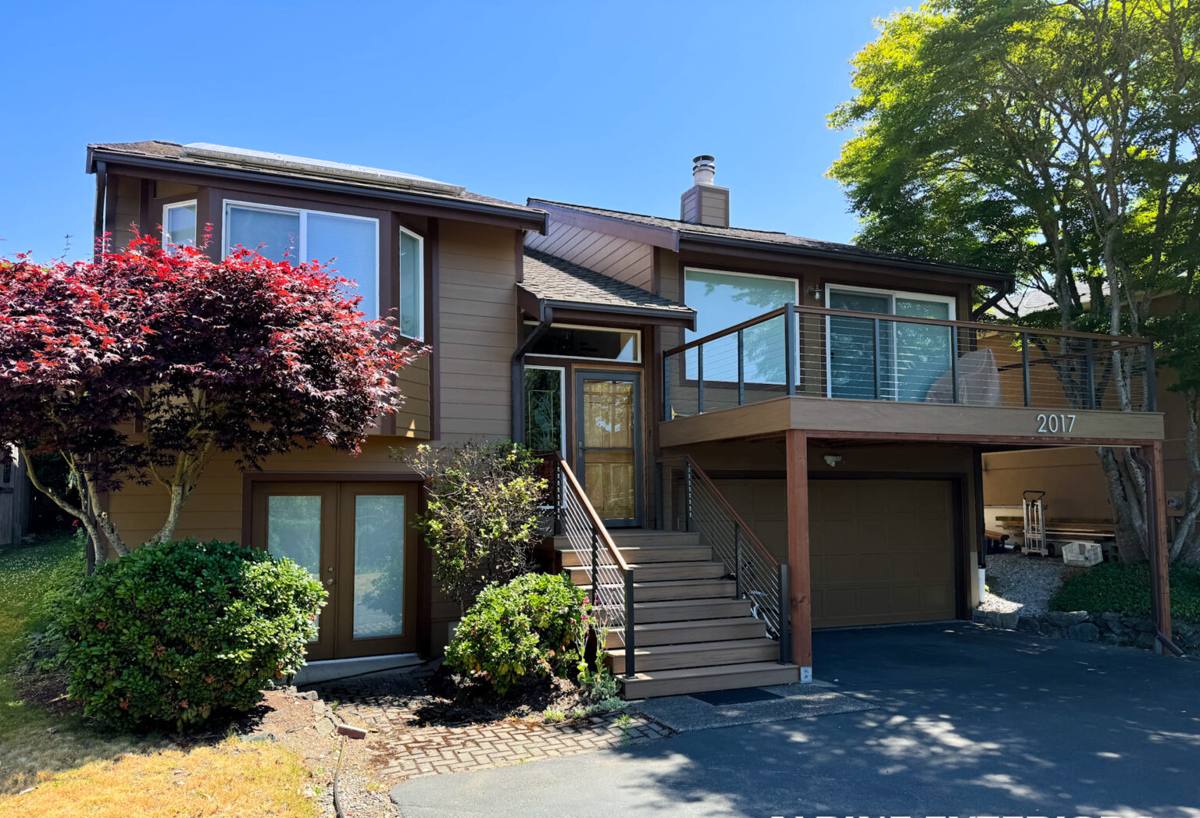
Cap Sante sits close to the water, which means homes here take a different kind of weather beating than houses further inland in Skagit County. Salt-laden air off the marina and Guemes Channel works its way into window hardware and frame joints year-round. Add driving rain that comes in sideways during winter storms, plus a moss and mildew season that can stretch from fall through spring, and you have a set of conditions that ages ordinary windows faster than most homeowners expect. Energy-efficient windows done right for this neighborhood aren't just about lower heating bills — they're about frames, seals, and glass that can actually stand up to what Cap Sante throws at them.
What the Marine Climate Actually Does to Windows
It helps to understand the specific failure patterns we see on window replacement and repair calls in this area, because they shape how we approach the job.
Salt Air and Corrosion
Airborne salt accelerates corrosion on hardware, screws, and metal window components. Latches get stiff or seize, weep holes clog with corrosion byproducts, and untreated fasteners can rust and stain the surrounding frame or siding within a few seasons.
Wind-Driven Rain
Anacortes storms frequently push rain horizontally rather than straight down. Windows that rely on caulk alone, without proper flashing behind the trim, let water track behind the frame and into the wall cavity — a problem that often isn't visible until there's already rot or mold.
Moss, Mildew, and Constant Dampness
Extended damp seasons keep humidity around window openings elevated for long stretches. On older wood windows, that means slow rot at the sill and lower corners. On any window type, it means condensation and mildew growth if the unit isn't sealed and drained correctly.
What "Energy-Efficient" Should Mean in This Location
A window can carry a good energy rating on paper and still perform poorly in a coastal Anacortes setting if it isn't matched to local conditions. For Cap Sante homes, we look at three things together: how well the glass and frame resist heat loss, how well the unit sheds and drains water, and how well the materials tolerate salt exposure over time.
| Frame Material | Salt Air Tolerance | Maintenance | Typical Fit for Cap Sante |
|---|---|---|---|
| Vinyl | Good — won't corrode or rust | Low; occasional cleaning | Strong all-around choice for most homes |
| Fiberglass | Very good — dimensionally stable, resists pitting | Low | Good option where extra rigidity or larger openings are needed |
| Aluminum | Poor unless marine-grade and properly finished | Moderate to high near salt air | Generally not our first recommendation this close to the water |
| Wood (unclad) | Poor without diligent upkeep | High — regular painting/sealing required | Only recommended with a durable exterior cladding |
| Wood-clad (vinyl or fiberglass exterior) | Good on the exposed face | Low exterior, standard interior care | Good if wood interior appearance is wanted |
Beyond frame material, the glass package matters as much as the frame. In this climate we typically steer homeowners toward double- or triple-pane units with low-E coatings and warm-edge spacers, which resist both heat loss and the interior condensation that damp coastal air tends to cause on older single-pane or poorly sealed windows.
Hardware and Weatherstripping
Corrosion-resistant hardware (stainless or coated fasteners and latches) and quality compression weatherstripping matter more here than in drier parts of the state. Cheaper hardware is often the first thing to fail in a salt-air environment, long before the glass or frame shows any wear.
What a Correct Installation Actually Involves
Most window performance problems we're called out to fix in Anacortes aren't caused by a bad window — they're caused by a window that was installed without the details that matter in a wet, salty climate. A correct installation includes:
- Removing the old unit and inspecting the rough opening for hidden rot or moisture damage before anything new goes in
- Installing proper flashing tape and drainage planes so any water that gets past the exterior trim is directed back out, not into the wall
- Using a sloped sill pan to shed water away from the framing
- Sealing with exterior-grade sealants rated for the temperature swings and UV exposure of this region
- Shimming and fastening the unit square and true, so weatherstripping compresses evenly on all sides
- Confirming weep holes and drainage paths are clear and functioning before finishing the trim
- Matching interior and exterior trim and caulking to the home's existing details, not just the opening
Skipping any one of these steps might not show up as a problem for a year or two — but in a Cap Sante microclimate, it usually does show up eventually, often as a soft spot in the sill or a mildew smell that wasn't there before.
How Our Process Works for Cap Sante Homes
1. On-Site Assessment
We start by looking at the home's actual exposure — how close it sits to open water or prevailing wind, the condition of existing frames and sills, and any signs of past water intrusion. This tells us where extra flashing detail or moisture barriers are worth the added attention.
2. Product Recommendation
Based on that assessment, we recommend frame materials, glass packages, and hardware suited to the specific exposure of that house — not a one-size-fits-all package. A home tucked slightly back from the water may not need the same spec as one facing the channel directly.
3. Careful Removal and Opening Inspection
Old windows come out carefully so we can check the framing underneath before anything new is installed. Any rot or moisture damage found at this stage gets addressed before the new window goes in — not covered over.
4. Installation With Full Weatherproofing Detail
Flashing, sill pans, sealants, and fastening are done to the standard described above, every time, regardless of whether the damage from a shortcut would be visible right away.
5. Final Check and Cleanup
We test operation, check seals, and confirm drainage before calling the job finished, then clean up the work area.
Signs Your Current Windows Are Working Against You
Homeowners in this neighborhood often live with a slowly worsening window problem for years before addressing it, simply because the signs are gradual. Watch for:
- Visible condensation or fogging between panes (a sign the seal has failed)
- Drafts you can feel near the frame even when the window is fully latched
- Hardware that's stiff, rusted, or hard to latch
- Soft or discolored wood at the sill or lower frame corners
- A musty smell near windows during the wetter months
- Noticeably higher heating costs compared to similarly sized homes nearby
- Paint or finish peeling on the interior or exterior frame
Any one of these on its own isn't necessarily urgent, but two or more together usually means it's worth having the windows looked at before the underlying framing is affected.
What Affects the Cost of a Window Replacement Project
| Factor | Why It Matters Here |
|---|---|
| Frame material chosen | Vinyl, fiberglass, and clad-wood carry different price points and different long-term salt-air performance |
| Glass package (double vs. triple pane, coatings) | Higher-performance glass costs more upfront but reduces condensation and heat loss in a damp climate |
| Condition of existing framing | Hidden rot or water damage found during removal adds repair work before the new window can go in correctly |
| Number and size of openings | Larger or custom-sized windows, common on view-oriented homes, cost more than standard sizes |
| Trim and finish matching | Matching existing interior/exterior trim details can add labor versus a simple standard trim-out |
| Accessibility | Upper-story or hard-to-reach windows can affect labor time and equipment needs |
We provide itemized, honest estimates so you can see exactly what's driving the cost on your specific home, rather than a flat per-window number that doesn't account for your situation.
Why Local Cap Sante Experience Matters
A contractor who mostly works drier, inland parts of Skagit County can still do competent general carpentry, but they may not instinctively account for salt-air hardware corrosion, the specific wind-driven rain patterns near the water, or how long moisture actually sits around a window opening here before it dries out. Crews who regularly work Cap Sante and the surrounding Anacortes waterfront know which details aren't optional in this exposure — the extra flashing course, the corrosion-resistant fastener, the sill pan that isn't strictly required by code but that experience says matters. That local pattern recognition is often the difference between a window that performs well for decades and one that needs attention again in a few years.
If your Cap Sante home has drafty, foggy, or hard-to-operate windows — or you're planning ahead for a remodel — we're glad to take a look and give you a straightforward, no-pressure estimate. Use the form below to get started.