 Anacortes Siding
 Roof Repair in Conway: A Different Set of Conditions
Conway sits low in the Skagit River delta, close to the water and surrounded by farmland, wetlands, and tree cover. That combination gives local roofs a harder time than homes just a few miles inland. Salt-laden air moving in off Puget Sound and Skagit Bay accelerates corrosion on metal flashing, fasteners, and vents. Driving rain, common through the fall and winter, finds its way into any gap in a roof system that a drier climate would never expose. And because so much of the area sits in shade near trees, water, and low ground, moss and moisture have far more time each year to work into shingles, moss mats, and underlayment than they would on a roof in full sun.
None of this means a roof in Conway needs to fail early. It means repairs have to account for these conditions instead of treating every roof problem like a generic patch job. We've worked on homes throughout this part of Skagit County long enough to know which failure points show up here again and again, and we build our repairs to hold up against the specific weather this area sees.
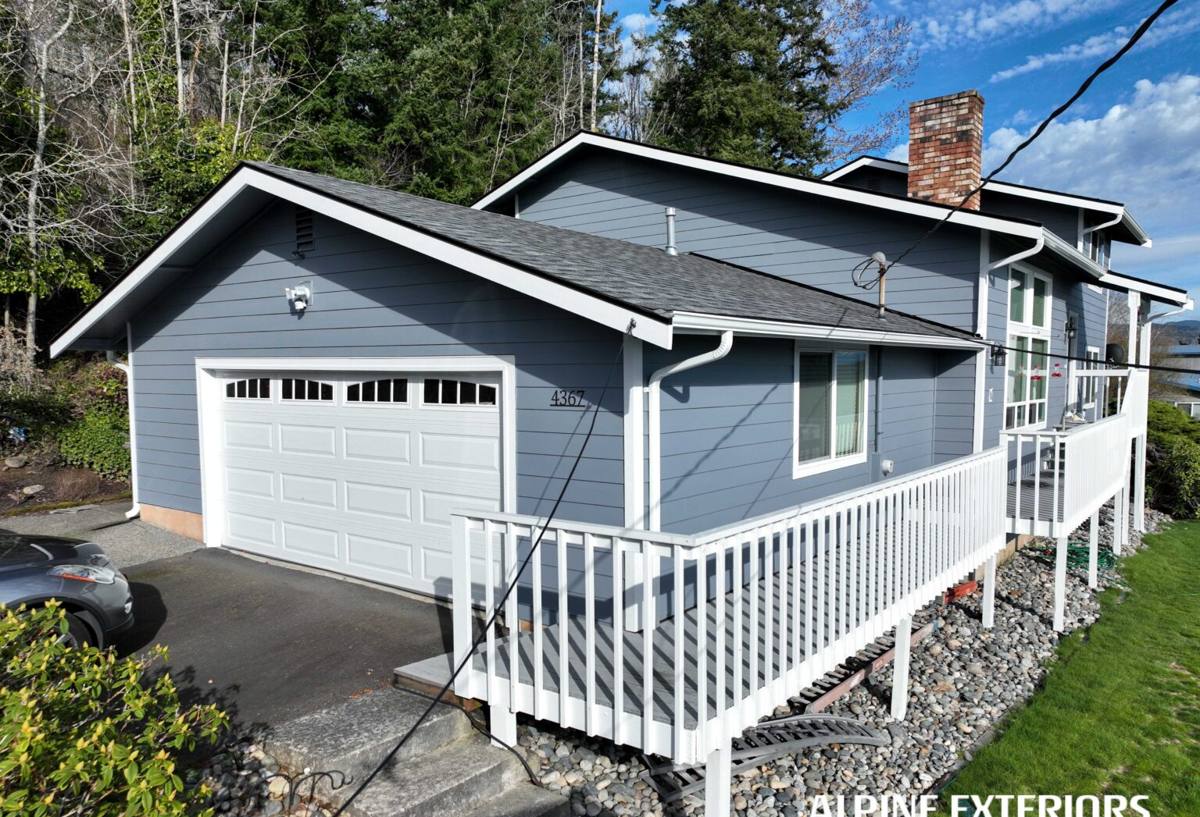
Common Roof Problems We See on Conway Homes
Moss and Organic Growth
Moss doesn't just sit on top of shingles looking bad — it holds moisture against the roof surface, lifts shingle edges as it grows, and works its way under laps where water then has a direct path underneath. In a community with as much shade and dampness as Conway sees for much of the year, moss growth isn't occasional; it's a recurring maintenance issue that needs to be addressed before it becomes a leak.
Flashing and Fastener Corrosion
Salt air is hard on exposed metal. Flashing around chimneys, skylights, and roof-to-wall transitions, along with the nails and fasteners holding shingles down, corrode faster near the water than they do further inland. Once flashing rusts through or fasteners back out, water finds a way in even if the shingles themselves still look fine.
Wind-Driven Rain Intrusion
Western Washington storms often bring rain sideways, not straight down. That means water can be pushed up under shingle edges, through poorly sealed valleys, and around vent boots that a light rain would never reach. Roofs that look intact from the ground can still have active leak points that only show up during a hard blow.
Ponding and Slow Drainage
Low-slope sections — over porches, additions, or garages — are common on homes throughout this area, and Conway's flat, low-lying terrain doesn't help drainage. Standing water on a roof surface, even for a day or two after a storm, breaks down roofing material much faster than water that sheds quickly.
What a Correct Roof Repair Actually Involves
A roof repair that holds up isn't just replacing the shingles you can see damaged. It starts with figuring out where water is actually getting in, which isn't always the same spot as where the stain or damage shows up inside. Water travels along rafters and sheathing before it ever reveals itself on a ceiling, so a repair that only patches the visible symptom often leaves the real entry point untouched.
A proper repair on a Conway roof typically includes:
- Tracing the leak to its actual entry point, not just the interior stain
- Checking the condition of the decking underneath — soft, delaminated, or rotted sheathing has to be addressed, not covered over
- Inspecting and replacing corroded flashing at chimneys, valleys, skylights, and wall transitions
- Removing moss and organic debris from the surrounding area, not just the immediate repair zone
- Resealing or replacing vent boots and penetrations, which are common failure points regardless of roof age
- Matching replacement shingles or panels as closely as possible in material and color
- Confirming proper water flow off the repaired section so it doesn't just relocate the problem
Skipping any of these steps usually means the same leak reappears within a season or two, often worse than before because the underlying decking has had more time to absorb moisture.
Our Repair Process
1. On-Site Inspection
We start by walking the roof and the attic or interior space below it when accessible. Ground-level assumptions about roof damage are frequently wrong — a stain on a ceiling can originate several feet away from where the water actually entered, especially on a roof with any pitch or valley complexity.
2. Honest Assessment
We tell you what we actually find, including when a repair is the right call and when it isn't. If a roof has multiple failure points or the decking underneath has been compromised over a wide area, we'll say so rather than patching around a bigger problem.
3. Written Scope and Estimate
Before any work starts, you get a clear explanation of what needs to be done, why, and what it costs. No vague line items.
4. The Repair
We work efficiently and clean up thoroughly — old shingles, nails, and moss debris don't get left in gutters, on the ground, or in landscaping.
5. Follow-Up
After a repair, we check that water is draining the way it should and that the surrounding roof area wasn't disturbed in a way that creates a new weak point.
Repair or Replace? How We Help You Decide
Not every roof problem calls for a full replacement, and not every leak can be permanently solved with a patch. The right call depends on the roof's age, how widespread the damage is, and what condition the decking is in underneath. Here's how we generally weigh it:
| Factor | Leans Toward Repair | Leans Toward Replacement |
|---|---|---|
| Roof age | Under 15-20 years, depending on material | At or past expected service life |
| Extent of damage | Isolated to one section or flashing point | Multiple areas failing or widespread moss/moisture damage |
| Decking condition | Solid, dry sheathing under the damaged area | Soft, delaminated, or rotted decking over a large area |
| Repair history | First or occasional repair | Recurring leaks in different spots each year |
| Material match | Discontinued material still patchable | Original material no longer available or badly mismatched |
When a repair is the honest answer, that's what we recommend. When the numbers or the condition of the roof point toward replacement being the better long-term value, we'll explain why rather than stacking patches on a roof that's past the point of cost-effective repair.
Materials and Compatibility
Most repair work involves matching what's already on the roof — asphalt composition shingles are the most common material we work with on homes in this area, though we also repair metal roofing and cedar where it's still present. For asphalt shingle repairs, we source materials as close in weight, profile, and color as possible, since sun-fading and manufacturing changes over the years can make an exact match difficult on an older roof. For flashing, we use corrosion-resistant metal given how much faster standard steel breaks down in the salt-air conditions this area sees compared to roofs further from the water. We don't cut corners on fastener or flashing material just to save a few dollars up front, because that's exactly the kind of shortcut that shows up as a callback a year or two later.
Staying Ahead of Moss and Moisture Between Repairs
A repair fixes what's already gone wrong. Keeping moss and moisture from causing the next problem takes a bit of ongoing attention, especially on shaded or low-slope sections of roof. A few habits go a long way:
- Keep gutters and downspouts clear so water isn't backing up under roof edges
- Trim back overhanging branches to cut down on shade and debris buildup
- Remove moss buildup before it spreads across a full slope, not after
- Have flashing and vent boots checked periodically, not just when a leak appears
- Address small leaks quickly — decking damage gets more expensive the longer it sits
None of this eliminates the need for repairs entirely, but it stretches the time between them and keeps small issues from turning into decking replacement or a full re-roof.
Why It Matters to Hire a Crew That Already Works This Area
Roofing problems in Conway aren't identical to roofing problems in a drier inland part of Skagit County, or even in nearby communities that sit further from the water. A crew that already works this stretch of the county has seen how salt air, standing moisture, and moss actually behave on roofs here — not in a textbook, but on real homes a short drive from your own. That familiarity shows up in small but important ways: knowing which flashing details tend to fail first in this environment, recognizing moss damage before it's obvious from the ground, and not underestimating how much drying time a repair needs to hold in this climate. It's the difference between a repair that's built for the conditions and one that just gets a roof through the next dry stretch.
If you're dealing with a leak, visible moss buildup, or damaged flashing on a Conway roof, we're happy to take a look and give you a straight answer about what it needs. The estimate is free, there's no pressure attached to it, and you can fill out the form below to get started.