 Anacortes Siding
 Siding Built for Where You Actually Live
Fidalgo Island sits right where the Salish Sea weather comes ashore. Homes here take a steady mix of salt-laden air, driving rain off the water, and long stretches of gray, damp months where moss and algae get a real head start on anything that holds moisture. That combination is harder on exterior siding than most inland Skagit County neighborhoods ever see. It's also exactly the kind of environment James Hardie fiber cement siding was engineered to handle, provided it's installed correctly for this specific climate.
We install James Hardie exclusively. Not as a marketing angle, but because after years of working exteriors around Anacortes and the island, it's the one product system that consistently holds up to salt exposure, doesn't feed moss the way wood-based products do, and keeps its factory finish without the homeowner having to repaint every few years. This page covers what Fidalgo Island homes specifically need from their siding, what a correct James Hardie install involves, and how our process works from first look to final walkthrough.
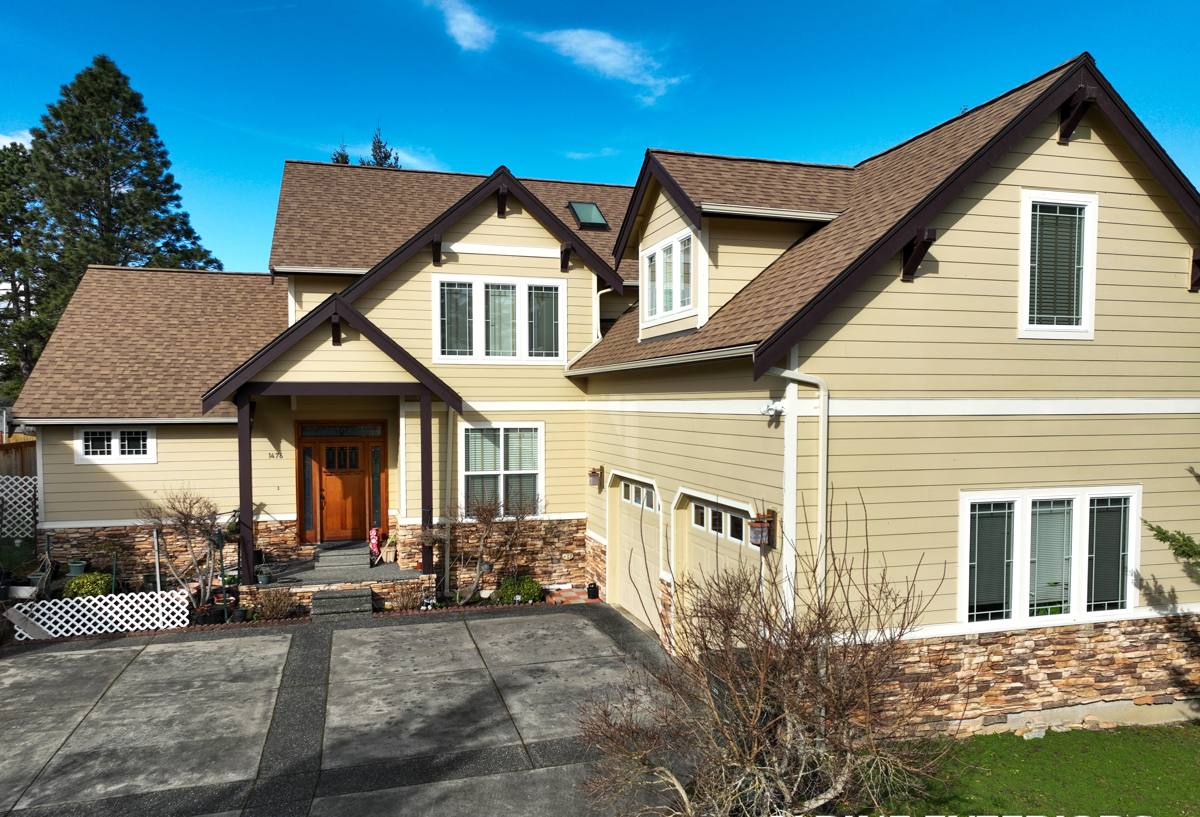
What Salt Air and Moss Season Actually Do to Siding
It helps to understand the two forces working against your siding out here, because they don't act the same way.
Salt Air and Coastal Moisture
Airborne salt from the water settles on exterior surfaces and accelerates corrosion of fasteners, trim metal, and any exposed hardware. It also draws moisture, which means surfaces near the shoreline stay damp longer after a rain than they would a few miles inland. Untreated or poorly sealed wood products absorb that moisture, swell, and eventually rot from the inside out — often before the surface shows obvious damage.
Moss, Algae, and the Long Damp Season
Anacortes gets long stretches of overcast, wet weather where surfaces simply don't dry out for days at a time. Wood siding, primed spruce, and even some engineered wood products give moss and algae organic material to feed on. Once established, moss holds moisture against the siding surface, which speeds up whatever rot or finish failure is already starting underneath. Fiber cement doesn't offer that organic food source, which is a meaningful, practical difference here — not a marketing point.
What This Means for Product Choice
- Fasteners and trim need to be corrosion-resistant, not just standard-grade.
- Caulking and flashing details matter more here than in drier climates — sloppy sealant work fails faster near the water.
- A factory-baked finish holds up better than field-applied paint, which chalks and fades faster under salt exposure.
- Ground clearance and drainage details around the siding base matter more where moss and standing moisture are common.
Why James Hardie Fits This Environment
James Hardie fiber cement siding is engineered specifically around regional climate demands, which is part of why we standardized on it rather than mixing in other products. A few things make it a strong fit for Fidalgo Island specifically:
| Concern | How James Hardie Addresses It |
|---|---|
| Moisture and rot | Fiber cement doesn't absorb and swell the way wood-based sidings do, which matters through a long wet season |
| Salt air exposure | Non-combustible cement composition resists the kind of surface breakdown that salt air accelerates in wood and some composite products |
| Moss and algae growth | No organic wood fiber on the exposed surface means less material for moss and algae to colonize compared to wood-based sidings |
| Finish longevity | ColorPlus factory finish is baked on and warranted separately from the substrate, resisting fade and chalking better than field-applied paint |
| Regional engineering | Hardie's HZ5 product line is engineered for Pacific Northwest freeze-thaw and moisture conditions, not a one-size-fits-all national spec |
None of this means James Hardie is maintenance-free. It still needs proper caulking upkeep, occasional gentle washing to keep moss from getting a foothold, and periodic inspection of trim and flashing. But it starts from a much stronger baseline than wood, primed spruce, or vinyl in this specific climate.
What a Correct Fidalgo Island Install Actually Involves
The product is only half the equation. Fiber cement siding installed without attention to local conditions can still fail early — usually at the seams, fastener points, and flashing details, which is where most siding problems actually start regardless of brand.
Moisture Management Behind the Siding
A correct install includes a properly lapped water-resistive barrier, correctly integrated flashing at windows, doors, and any horizontal trim, and rain-screen or drainage gap detailing where the wall assembly calls for it. This is what actually keeps bulk water from getting behind the siding in the first place — the siding itself is the last line of defense, not the only one.
Fastening and Clearances
James Hardie's installation specs call for specific fastener types, spacing, and penetration depth, along with minimum clearances from grade, roof lines, and abutting surfaces. In a coastal environment those clearances matter more than the spec sheet number alone suggests — tight clearances near grade are exactly where moss and standing moisture cause the most damage over time.
Joint and Seam Treatment
Butt joints, corners, and panel seams are where water intrusion typically starts if they're rushed. Correct treatment means factory-primed or field-primed cut edges, properly caulked joints with a quality sealant rated for this climate, and attention to how panels are lapped rather than just butted together.
Common Install Mistakes That Show Up Later
- Fasteners driven too high or too low on the panel, leading to premature cracking
- Missing or improperly lapped flashing at window and door heads
- Siding installed too close to grade, trapping moisture and inviting moss
- Cut edges left unprimed, allowing moisture into the panel core
- Caulk used to bridge gaps that should have been flashed instead
Choosing the Right James Hardie Product for Your Home
James Hardie makes several siding profiles and the right choice depends on your home's style and exposure, not just personal preference.
- HardiePlank lap siding — the most common choice, available in several exposure widths and textures, works well on most Fidalgo Island home styles
- HardiePanel vertical siding — often used for accent sections, gables, or a more modern look
- HardieShingle — for homes wanting a shingle-style look without the maintenance burden of wood shakes
- HardieTrim — matching trim boards that hold up to the same coastal exposure as the field siding, which matters since mismatched trim durability is a common failure point
For homes closest to the water or in more exposed spots on the island, we'll also talk through color selection, since darker ColorPlus finishes absorb more heat and can affect how the panels expand and contract, while lighter finishes tend to show less of the fading that intense sun and salt exposure can accelerate over time.
Our Process for a Fidalgo Island Project
Every home on the island sits a little differently relative to wind, sun, and water exposure, so we start with a real assessment rather than a generic quote.
- On-site evaluation — we look at your current siding's failure points, your home's exposure to prevailing wind and moisture, and any existing rot or water damage that needs addressing before new siding goes up
- Product and color selection — we walk through Hardie profiles and ColorPlus options suited to your home's style and its specific exposure
- Detailed written estimate — scope, materials, and timeline laid out clearly, with no surprise add-ons buried in fine print
- Prep and moisture barrier work — addressing any underlying sheathing or water-resistive barrier issues before siding installation begins, since covering up an existing problem never ends well
- Installation to manufacturer spec — correct fastening, flashing, clearances, and joint treatment throughout
- Final walkthrough — going over the finished work with you and answering any maintenance questions before we consider the job done
Why Hire a Crew That Already Works This Area
Siding installation isn't identical everywhere in Skagit County. A crew that mostly works drier, inland projects can still do competent general work but may not automatically account for the clearance, flashing, and fastener decisions that matter most a few blocks from saltwater. Working Fidalgo Island and the greater Anacortes area regularly means we've already seen how different exposures on the island affect moss growth, wind-driven rain patterns, and where homes tend to develop problems first. That local pattern recognition is part of what keeps a siding job from becoming a callback.
Maintenance That Keeps Your Investment Protected
James Hardie siding is low-maintenance, not no-maintenance, and the local climate makes a light annual routine worth the time.
- Rinse siding gently once or twice a year to keep moss and algae from establishing, especially on north-facing or shaded walls
- Inspect caulking at joints, trim, and penetrations annually and re-caulk any cracked or separated sections
- Keep vegetation and sprinkler spray away from direct contact with siding to reduce prolonged moisture exposure
- Check fastener and trim areas periodically for signs of corrosion or loosening
- Address any small chips or damage promptly, since exposed cut edges are more vulnerable to moisture intrusion than the finished face
If you're weighing a siding replacement or repair on Fidalgo Island, we're happy to take a look and give you an honest read on what your home actually needs. Reach out for a free, no-pressure estimate using the form below.