 Anacortes Siding
 Why Guemes Island Homes Wear Out Siding Faster
Guemes Island sits just off Anacortes, separated from the mainland by a short ferry ride, but that short stretch of water changes everything about how a house ages. Homes here take a steady diet of salt-laden air off the surrounding waters, wind-driven rain that hits siding sideways instead of straight down, and a long, damp moss season that keeps north- and west-facing walls wet for weeks at a time. None of this is unique to any one street or bluff on the island — it's the baseline condition for anything built close to Skagit County's shoreline, and it's the reason siding that performs fine forty miles inland can fail early out here.
Salt air is corrosive to exposed metal fasteners and trim, and it accelerates the breakdown of coatings that aren't rated for marine exposure. Combine that with rain that gets pushed under laps and around poorly flashed openings, and you get the classic Pacific Northwest island problem: siding that looks fine from the road but is quietly rotting, delaminating, or growing moss and mildew behind the surface. A siding replacement on Guemes Island isn't just a cosmetic upgrade — it's a chance to fix the moisture and material choices that caused the failure in the first place.
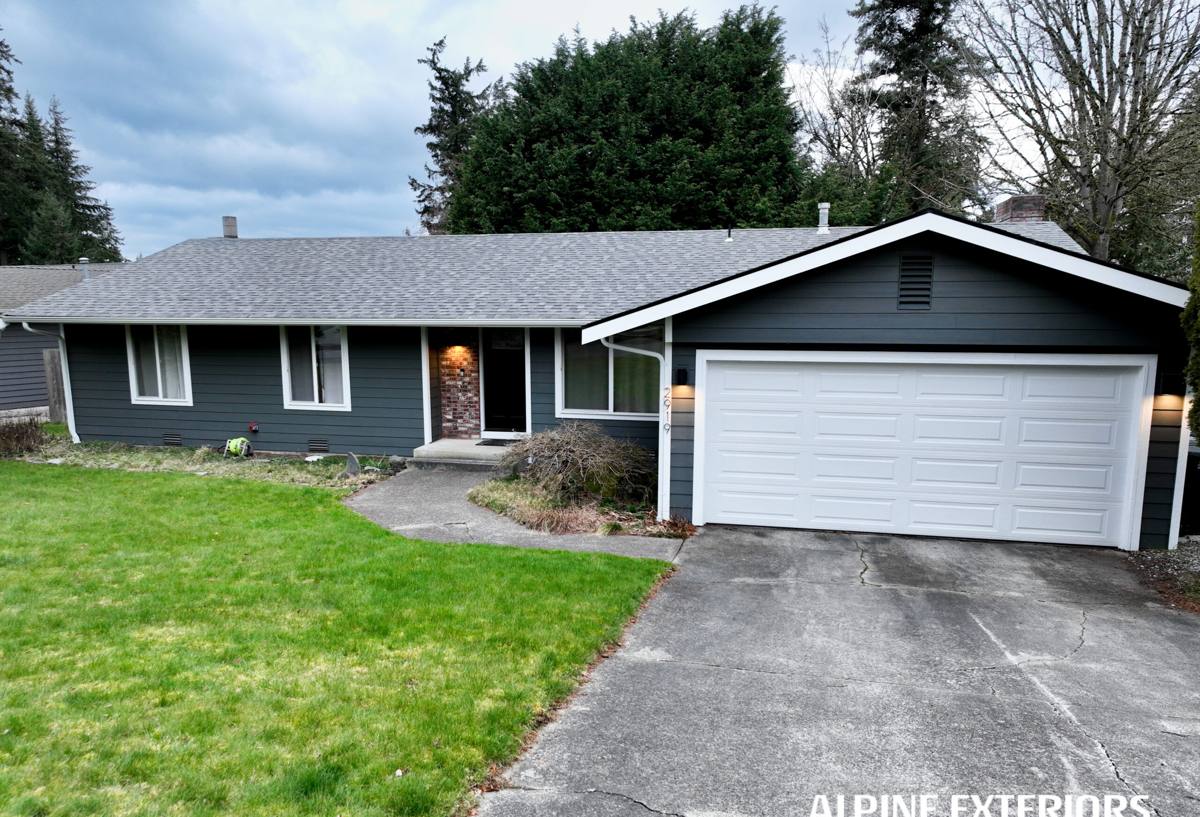
What Driving Rain and Moss Actually Do to a Wall
Driving Rain
Wind off open water doesn't let rain fall straight down — it pushes water horizontally into laps, seams, and anything with an exposed edge. Siding systems that rely on tight tolerances or paint-only protection at the cut edges are the first to show water intrusion, usually starting at butt joints, window and door trim, and lower courses near grade or decks.
Moss and Sustained Moisture
Shaded, north-facing walls and anything under overhanging trees on Guemes Island stay damp far longer after a storm than a wall in full sun. That extended damp period is exactly what moss, algae, and mildew need to take hold. On some siding materials this is just a cleaning problem. On others — anything with an organic core or a coating that traps moisture rather than shedding it — sustained dampness leads to swelling, soft spots, and eventual structural failure of the panel or plank itself.
Why We Install James Hardie Fiber Cement — and Nothing Else
We standardized on James Hardie fiber cement siding for every job we do, including here on Guemes Island, and we don't install vinyl, LP SmartSide, cedar, primed spruce, or other fiber cement brands. That's a deliberate professional standard, not a sales pitch, and it comes down to how these materials behave in exactly the conditions this island produces.
- Non-combustible core: Hardie's fiber cement won't ignite, warp, or melt — a real advantage during dry summer stretches when wildfire smoke and ember exposure are a regional concern.
- Engineered for moisture, not just painted against it: Hardie's HZ5 product line is formulated specifically for wetter, harsher climates like the Pacific Northwest coast, resisting moisture-driven swelling and cracking better than wood-based or foam-core alternatives.
- ColorPlus factory finish: The color is baked on in a controlled factory process rather than field-painted, which gives far more consistent coverage and adhesion in salt air than a job-site paint job can match.
- Dimensional stability: Fiber cement doesn't expand and contract with humidity swings the way wood-based products do, so joints and fastener lines stay tighter over the years.
- Backed by a strong transferable warranty that reflects the manufacturer's confidence in how the product performs long-term when installed to spec — which matters most exactly in a climate this demanding.
We're not going to tell you other products are junk — vinyl is affordable and low-maintenance in mild climates, cedar has real curb appeal, and engineered wood siding has improved a lot. But we've made a professional call that on a site like Guemes Island, with this much salt exposure, wind-driven rain, and moss pressure, fiber cement is the material that holds up with the least long-term risk to the homeowner. That's why it's the only thing we put on a wall.
What a Correct Siding Replacement Actually Involves
Replacing siding is not just swapping old panels for new ones. A job done right on Guemes Island addresses everything the old siding was hiding or failing to manage:
- Full tear-off and inspection: Removing the old siding down to the sheathing so we can actually see the condition of the wall — not guess at it.
- Sheathing repair: Any rot, soft spots, or water-damaged sheathing gets cut out and replaced before anything new goes up. Covering damaged sheathing just locks the problem inside the wall.
- Weather-resistive barrier: A properly lapped and sealed moisture barrier goes on before siding — this is the layer that actually stops wind-driven rain that gets past the surface material.
- Flashing at every penetration: Windows, doors, hose bibs, vents, and any other wall penetration get flashed so water is directed out, not into the wall cavity.
- Correct fastening: Hardie siding has specific fastener patterns and clearances; in a salt-air environment, using the right corrosion-resistant fasteners at the right spacing is not optional.
- Proper clearances at grade and trim: Siding installed too close to the ground, a deck, or a roofline creates a wicking point for moisture — a detail that's easy to get wrong and costly to ignore.
- Caulking and sealant only where the system calls for it: Over-caulking a fiber cement system can trap moisture instead of releasing it; under-caulking leaves gaps. Both are installer errors, not material flaws.
Signs Your Siding May Already Need Replacing
- Persistent moss or algae streaking on north- or west-facing walls that returns quickly after cleaning
- Soft or spongy spots when you press on the siding, especially near the bottom courses
- Peeling, bubbling, or chalky paint that won't hold a fresh coat
- Visible warping, cupping, or gaps opening up at seams and corners
- Rising energy bills with no other explanation — a sign the wall assembly behind the siding may be compromised
- Interior signs like musty smells, staining, or bulging drywall near exterior walls
Hiring a Crew That Already Works Guemes Island
Guemes Island isn't like a mainland Anacortes neighborhood job. Material deliveries, crew scheduling, dumpster and disposal logistics, and even simple things like showing up to walk a site all have to account for the ferry. A contractor who hasn't worked the island before will often underestimate this — leading to delayed starts, half-loaded material trips, or crews standing around waiting on a schedule they didn't plan for.
Working Guemes Island regularly means we plan around ferry timing as a normal part of the job, not an afterthought that blows up the schedule. It also means we already understand the wind and moisture exposure specific to island-facing walls versus more sheltered ones, so the flashing and clearance details get the attention they actually need rather than a generic mainland approach applied blindly to an island house.
Cost Factors on a Guemes Island Siding Job
Every home is different, but the same handful of factors drive cost on most siding replacement projects here. We give firm numbers only after walking your specific house.
| Factor | Why It Matters Here |
|---|---|
| Extent of sheathing damage | Long-term moisture exposure common on island walls often means more hidden repair than expected |
| Wall exposure and orientation | North- and west-facing walls with heavier moss/rain exposure may need extra flashing detail |
| Home size and complexity | Number of corners, penetrations, window/door trim, and roofline transitions |
| Siding profile and accessories | Lap width, trim style, and factory color selection affect material cost |
| Access and logistics | Ferry scheduling and site access can affect delivery and crew planning, though not typically the base labor cost |
| Existing material removal | Tear-off and disposal of the old siding, especially if it's failing and brittle |
Our Process, Start to Finish
- Walkthrough and honest assessment: We look at your current siding, note visible damage, and talk through what we expect to find once tear-off starts.
- Written estimate: Clear scope, product selection, and pricing — no vague allowances hiding surprises later.
- Scheduling around the ferry: We plan material delivery and crew days with island logistics built in from the start.
- Tear-off and sheathing inspection: Full removal, with photos and a straight conversation if we find rot or damage beyond what was visible.
- Weather barrier, flashing, and Hardie installation: Installed to manufacturer spec, with attention to the details this climate punishes most.
- Final walkthrough: We go over the finished work with you before calling the job done.
A Straightforward Next Step
If your Guemes Island home is showing moss buildup that won't stay clean, soft spots, peeling paint, or siding that's simply past its service life, it's worth getting a real look before another wet season adds to the damage. We'll walk your home, tell you honestly what we see, and put together a clear, no-pressure estimate for James Hardie siding built for this exact stretch of Skagit County coastline. Fill out the form below to get started.