 Anacortes Siding
 Why Decks in Oak Harbor Take a Different Kind of Beating
Oak Harbor sits out on Whidbey Island, connected to the Anacortes side of Fidalgo Island by the Deception Pass corridor, and it shares the same marine exposure that wears down every structure along this stretch of the Salish Sea. Salt-laden air off the water accelerates corrosion on anything metal — nails, screws, joist hangers, bolts — long before the wood around them shows obvious damage. Add in driving rain that comes in sideways during fall and winter storms, and a moss and algae season that can stretch from October well into spring, and you have a climate that attacks decks from every angle: from above with UV and rain, from below with ground moisture, and from the inside out with corroding fasteners.
None of this means decks in Oak Harbor are doomed to fail early. It means they need to be built and repaired with that exposure in mind, not treated like a deck in a dry inland climate. A repair that ignores the salt air and moss cycle usually looks fine for a season or two, then fails again in the same spots.
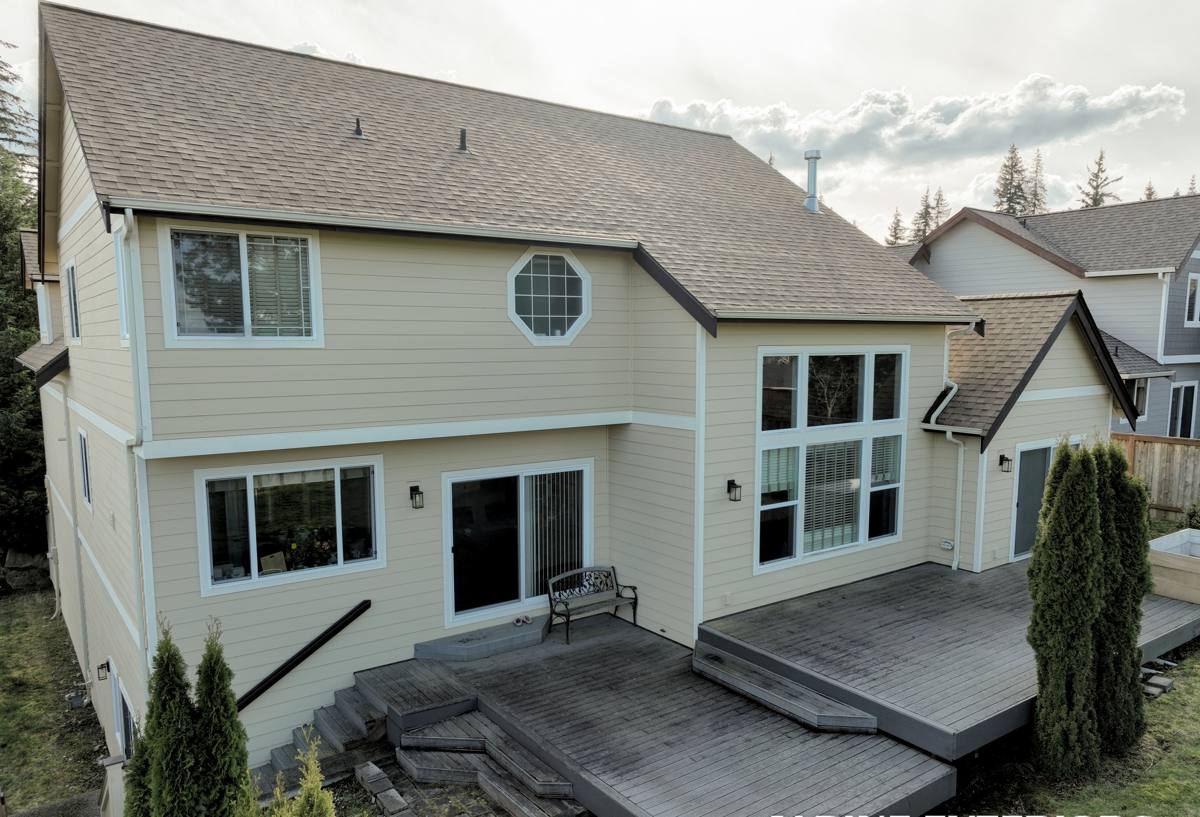
Signs Your Deck Needs Repair — Not Just a Cleaning
A lot of deck problems in this area get mistaken for cosmetic issues when they're actually structural. Moss and green staining are the obvious ones, but they're often a symptom of moisture sitting somewhere it shouldn't, not just a surface nuisance. Before you decide a pressure wash will fix things, walk your deck and check for these:
- Soft, spongy, or springy decking boards, especially near the house or in shaded corners where moss holds moisture longest
- Rust streaks bleeding out from screw heads or around joist hangers
- Any gap, daylight, or movement where the deck ledger board meets the house
- Railings or posts that wobble or flex when you lean on them
- Stair stringers that feel bouncy or show splitting near the fasteners
- Persistent moss or algae that regrows within weeks of cleaning, which usually points to poor drainage or airflow underneath
- Visible rot, discoloration, or soft spots on support posts near ground contact
If you're seeing two or more of these, it's worth having someone look at the framing, not just the walking surface.
What a Proper Deck Repair Actually Involves
Starting Below the Surface
A repair that only replaces bad-looking boards and stops there is treating the symptom. The framing underneath — ledger, joists, beams, and posts — is what actually holds the deck up, and it's also what salt air and standing moisture damage first and hide longest. Any real repair starts with checking that structure: is the ledger board properly flashed and still solidly attached to the house framing, are joist hangers corroded or undersized, are posts and footings still sound and not sitting in wet soil or standing water.
Fasteners and Hardware
In a marine climate, the hardware is often the weak link before the wood is. Fasteners that aren't rated for corrosion resistance can rust and lose their grip inside boards that otherwise look perfectly healthy. Part of a correct repair is replacing compromised fasteners and hardware with materials rated to hold up in salt air, not just matching whatever was there originally.
Decking, Railings, and Stairs
Once the structure underneath is confirmed sound (or brought back to sound), damaged decking boards, railing components, and stair parts get addressed. This is also the point where drainage and airflow under the deck get evaluated — a deck that never dries out between rains will keep growing moss no matter how many times it's cleaned.
Repair or Replace? How We Help You Decide
Not every deck problem calls for a full rebuild, and not every "just replace a few boards" job is actually enough. The honest answer depends on how far the damage has spread and how old the underlying structure is.
| Factor | Leans Toward Repair | Leans Toward Replacement |
|---|---|---|
| Framing condition | Ledger, joists, and posts test solid | Rot or corrosion found in multiple structural members |
| Age of deck | Under roughly 12-15 years, built to a reasonable standard | Older deck nearing or past typical service life for this climate |
| Extent of damage | Isolated to a few boards, one railing section, or a stair run | Damage recurring in multiple areas or spreading since last repair |
| Drainage/airflow | Underside of deck stays reasonably dry between rains | Chronic moisture trapped underneath with no practical fix except rebuilding |
| Budget outlook | Targeted repair costs a fraction of full replacement | Repair costs start approaching a meaningful share of rebuild cost |
Cost for straightforward, targeted repairs is typically a modest fraction of what a full rebuild runs, while decks needing extensive structural work start to close that gap — which is exactly why an honest structural check up front matters more than guessing from the surface.
Materials We Use and Why
Wood decking, composite decking, and hardware all behave differently in a climate like this, and the right choice depends on what's already there and what the homeowner wants to maintain long-term.
Wood vs. Composite for Repairs
If your deck is wood and the framing is sound, repairing with quality treated lumber that matches the existing structure is often the most practical route. If moss and moisture have been a constant fight, some homeowners choose to switch the walking surface to composite decking during a repair, since it doesn't absorb moisture the way wood does and resists moss staining better — though it still needs proper drainage and airflow underneath to perform well, and it comes with a higher upfront cost than matching wood.
Fasteners and Flashing
We use corrosion-resistant fasteners and hardware suited to marine air rather than standard-grade hardware, and we pay close attention to ledger flashing since a poorly flashed ledger is one of the most common hidden failure points on decks in this region. This is a professional standard we hold ourselves to, not a claim about what any particular product is incapable of — it's about matching materials to the exposure a deck actually sees here.
Our Deck Repair Process in Oak Harbor
- Inspection: We check the ledger connection, framing, posts, footings, and hardware before touching the decking surface, since that's where the real problems usually hide.
- Honest assessment: You get a clear picture of what's structural, what's cosmetic, and whether repair or replacement makes more sense for your deck's condition and age.
- Scope and estimate: We put together a written plan covering exactly what's being repaired, with materials and hardware specified.
- Permitting when required: Structural repair work sometimes requires permits depending on scope — we handle that conversation with you upfront rather than after the fact.
- The repair itself: Framing and hardware issues get corrected first, then decking, railings, and stairs.
- Final check: We walk the deck with you before calling the job done, checking for solid footing, secure railings, and proper drainage.
Why Local Experience with Oak Harbor Conditions Matters
A deck repair crew that mostly works drier inland areas will often default to standard-grade materials and standard assumptions about how long a repair should last. A crew that regularly works decks around Anacortes, Fidalgo Island, and out toward Oak Harbor already knows where salt air tends to attack fasteners first, which corners of a deck hold moss longest through a wet Skagit County winter, and which framing details get overlooked in repairs that don't account for this environment. That familiarity shows up in fewer callbacks and repairs that actually hold up through more than one wet season.
Keeping a Repaired Deck in Good Shape Afterward
A well-done repair still benefits from some ongoing attention in this climate. A few habits go a long way:
- Sweep debris and standing leaves off the deck regularly, especially in fall, so moisture and moss don't get a head start
- Rinse or gently clean moss and algae buildup before it has a chance to stain or hold moisture against the boards
- Keep gutters and downspouts near the deck clear so runoff isn't dumping directly onto or under it
- Check railings and stair connections once a year for any looseness before it becomes a bigger problem
- Reapply any wood sealant or finish on the schedule recommended for it, since coatings wear faster here than in drier climates
If your deck in Oak Harbor is showing soft spots, rust stains, wobbly railings, or moss that keeps coming back, we're happy to take a look and give you a straightforward, no-pressure estimate on what it actually needs. Fill out the form below and we'll get in touch to schedule a time.