 Anacortes Siding
 Why West Anacortes Roofs Take More Punishment Than People Expect
West Anacortes sits close enough to the water that homes here deal with a different mix of weather stress than roofs further inland in Skagit County. Salt-laden air moves through with the marine wind, driving rain comes in sideways during winter fronts, and the shaded, moisture-heavy conditions under mature evergreens give moss a long growing season that barely lets up. None of these forces are dramatic on their own, but stacked together over years they wear down flashing, loosen shingles, and soften roof decking in ways that aren't always obvious from the ground.
Storm damage repair in this neighborhood isn't just about patching what a single windstorm tore loose. It's about recognizing that a roof here has usually already been softened up by ongoing exposure before the storm ever hit, and a repair that only addresses the visible tear can leave the underlying weakness in place.
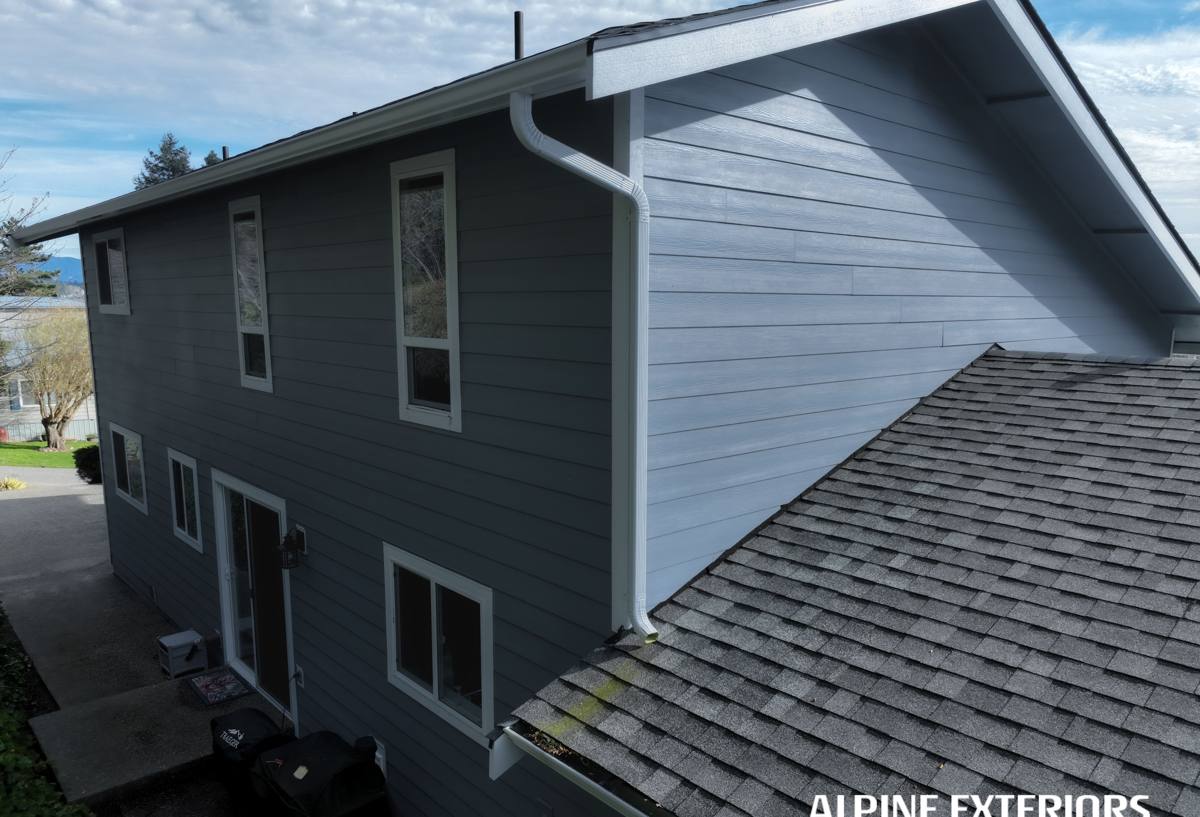
What Storm Damage Actually Looks Like Here
Homeowners often picture storm damage as missing shingles scattered across the yard. That happens, but in West Anacortes we more commonly find damage that's quieter and easier to miss:
- Shingles lifted or creased by wind gusts but not fully blown off — they look intact from the street but no longer seal properly
- Flashing around chimneys, vents, and roof-to-wall transitions pulled loose by wind uplift or corroded from salt exposure
- Moss mats that trapped storm rain against the roof surface, allowing water to work under shingle edges
- Gutters and downspouts overwhelmed or clogged with debris, sending overflow water back up under the roof edge
- Soft or discolored decking found only once shingles are pulled back, from slow moisture intrusion that predates the storm
This is why a proper storm damage inspection has to go past a visual scan from the driveway. A roof can look fine after a storm and still have compromised spots that will leak with the next heavy rain.
The Role Moss Plays in Storm Vulnerability
Moss doesn't just look bad — it changes how a roof handles wind and rain. Moss mats hold water against the shingle surface long after a storm has passed, which softens the granule layer and adhesive strips that keep shingles locked down. A roof with heavy moss going into a windstorm is more likely to lose shingles than a clean one, because the moss has already weakened the bond. Part of an honest storm repair assessment in this area means looking at moss coverage as a contributing factor, not a separate cosmetic issue.
What a Correct Storm Repair Involves
A repair that holds up isn't just about swapping in new shingles where old ones are missing. We treat storm repair as a sequence, not a single step:
- Full-slope inspection, not just the storm-damaged section, since wind uplift often loosens shingles beyond the area that failed outright
- Decking check at the repair site, because a shingle repair over soft or water-damaged decking will fail again quickly
- Flashing verification at nearby penetrations, since a storm strong enough to lift shingles is often strong enough to shift flashing too
- Matching materials as closely as possible in color, profile, and weight so the repair doesn't stand out or create a mismatched wear pattern later
- Proper fastening and sealing to current manufacturer specs, not just gun-nailing a patch into place
Skipping any of these steps is how homeowners end up calling a second contractor a year later for the same leak in a slightly different spot.
Repair Versus Replacement: How We Make That Call
Not every storm-damaged roof needs full replacement, and not every roof can be safely patched. The honest answer depends on the roof's age, how much of the surface is affected, and what we find once we're actually up there.
| Factor | Leans Toward Repair | Leans Toward Replacement |
|---|---|---|
| Roof age | Under 10-12 years, still within useful life | Nearing or past expected lifespan for its material |
| Damage extent | Isolated to one slope or section | Spread across multiple slopes or recurring in several spots |
| Decking condition | Solid, dry decking under the damaged area | Soft, delaminated, or repeatedly wet decking found in multiple areas |
| Moss/moisture history | Light, manageable moss with no prior leak history | Heavy long-term moss buildup with a history of leaks or repairs |
| Material match | Matching shingles or panels still available | Original product discontinued, making a clean patch impossible |
We'll walk you through which column your roof falls into and why, rather than defaulting to whichever option is more profitable for us. Sometimes a targeted repair is genuinely the right call, and we'll say so.
Our Process for a Storm Damage Call
When a West Anacortes homeowner calls after a storm, the process is straightforward:
- We schedule an inspection as soon as reasonably possible, since exposed decking or lifted shingles let moisture in with every rain that follows
- We document what we find — the damage itself, its likely cause, and any pre-existing wear that contributed — so you have a clear record, useful if you're filing an insurance claim
- We give you a straight explanation of repair versus replacement, with the reasoning behind it
- We provide a written estimate before any work starts, no surprise add-ons once we're on the roof
- We complete the repair with matched materials and proper flashing detail, and we clean up thoroughly, since storm debris and old shingle material can otherwise sit in gutters or landscaping for weeks
Insurance Claims and Storm Damage Documentation
Many storm repairs in this area end up going through homeowners insurance, especially after a named windstorm or a significant weather event. A few things make that process smoother:
Photograph what you can safely see from the ground before any tarping or repair work begins. Keep a record of the date and general weather conditions when the damage occurred. Get an inspection promptly, since insurers often want documentation that ties the damage to a specific storm event rather than gradual wear. We're glad to provide a written scope of damage that you can hand to your adjuster — we won't inflate a claim or invent damage that isn't there, but we will make sure legitimate storm damage is fully documented rather than underestimated.
Temporary Protection Matters
If a storm has left an active leak or exposed decking, a temporary tarp or seal is worth doing immediately, even before a full repair is scheduled. Skagit County's rain doesn't wait for a repair slot to open up, and a few days of exposed decking can turn a straightforward shingle repair into a decking replacement.
What to Check After a Storm — A Homeowner's Quick List
You don't need to get on the roof yourself, and we'd rather you didn't. From the ground and inside the house, here's what's worth checking after any significant wind or rain event:
- Shingle pieces, granules, or flashing bits in the yard or gutters
- Visible gaps, curling, or discoloration on roof slopes you can see from the street or neighboring high ground
- New water stains on ceilings or upper interior walls, even faint ones
- Gutters overflowing or pulling away from the fascia
- Any sagging or uneven roof line compared to before the storm
- Musty smells in the attic, which can indicate moisture that hasn't shown up as a visible stain yet
If any of these show up, it's worth having a roof looked at sooner rather than later — moisture problems get more expensive the longer they sit.
Why Local Experience with This Neighborhood Matters
A crew that regularly works West Anacortes roofs already knows the pattern: which slopes tend to hold moss longest based on tree cover and sun exposure, how salt air affects metal flashing and fasteners over time, and which storm tracks tend to hit this part of Anacortes hardest. That familiarity means less guesswork during an inspection and a repair plan that accounts for what's likely to happen to this roof over the next few years, not just what's broken today. It also means we're not learning the area's climate behavior on your roof — we've already seen how it plays out on homes nearby.
If a recent storm has left your roof lifted, leaking, or just looking worse for wear, we're happy to take a look and give you a straight assessment — no pressure, no inflated scope, just an honest read on what your roof needs. Use the form below to request a free estimate.